
As Artificial Intelligence integration becomes the new norm, we see waves of change in the working world as AI continues to displace jobs.
According to reports from PwC, McKinsey, and the World Economic Forum, artificial intelligence is expected to transform the global workforce fundamentally by 2050.
It is estimated that up to 50% of current jobs will require significant adaptation to AI and that automation and intelligent systems will become an integral part of everyday work.
How Fast Is AI Transforming the Workplace?
Source: Forbes
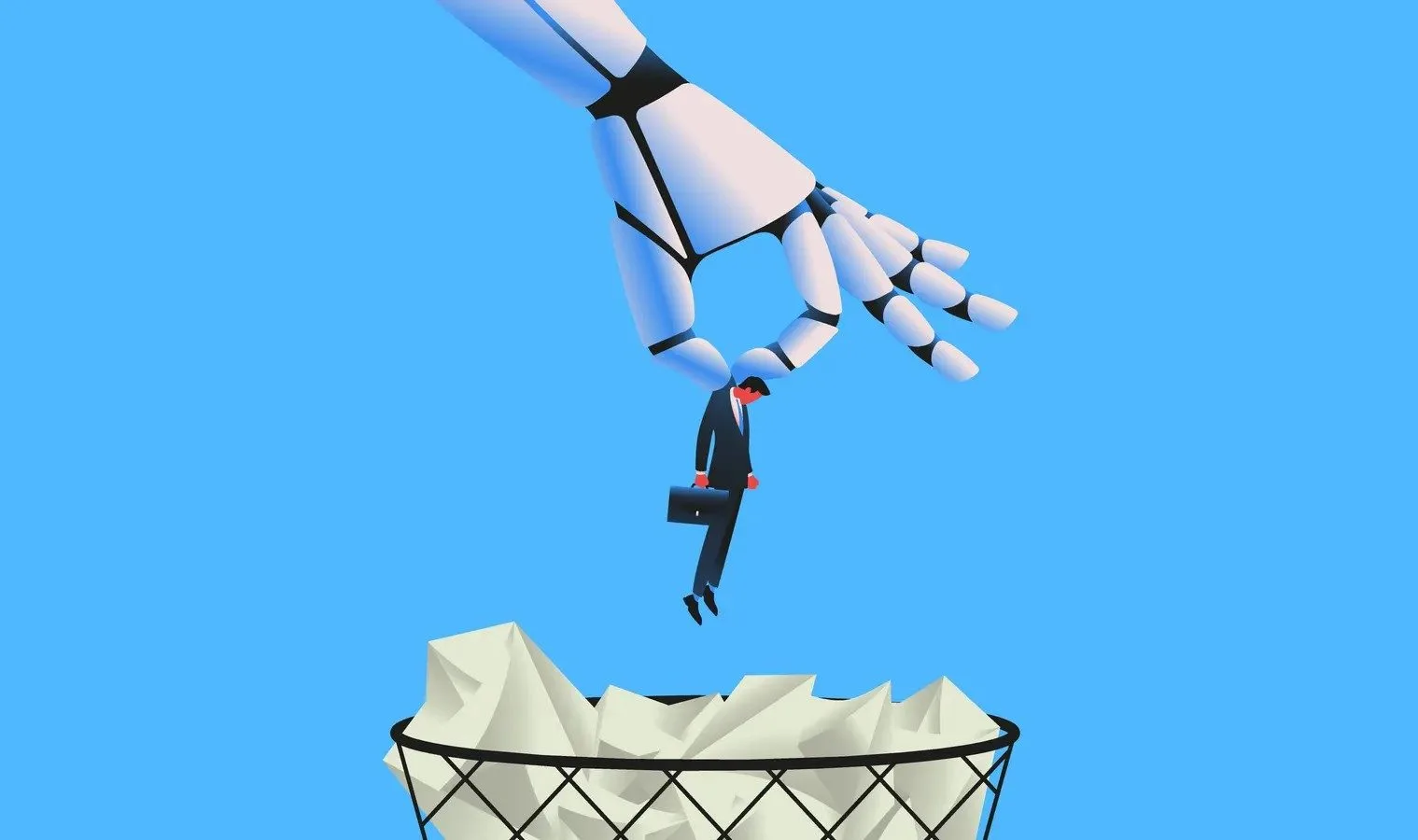
According to a McKinsey report, AI may take 10 to 30 years to reshape most jobs.
By 2030, most jobs in the US could be automated, and 60% greatly altered by AI tools.
Goldman Sachs predicted that up to half of all jobs can be fully automated by 2045, driven by generative AI.
Integration of AI into work processes is inevitable. Which jobs do we foresee being at risk of being displaced by AI tools?
Here are 5 industries AI is replacing.
Administrative Work: No Longer A Need For Manual Processing
Perhaps the most at risk of AI displacement, a 2024 study done by the Institute for Public Policy has found that 60% of administrative tasks can be easily replaced by AI.
AI is used for repetitive data processing, system automation with basic tasks like email correspondence, and identifying data trends.
Platforms like Microsoft 365 Copilot can be integrated into Microsoft’s productivity suite to boost productivity and eliminate time spent on simple and repetitive tasks.
Bloomberg’s Terminal enhancements can generate data and report sets faster than humans can.
Media Creation: From Brush To Bot

Source: GeekWire
It is no surprise that with the rise and prevalent adoption of AI tools like ChatGPT, Perplexity, and Gemini, businesses are starting to cut back on their content writers.
These tools produce content on a large scale and are able to imitate “human” writing.
Graphic designers are no exception.
DALL-E and ChatGPT can now generate images from text descriptions, creating less demand for graphic design jobs, which are costlier in comparison to the low subscription fees of these AI tools.
However, this is most likely to only refer to advertising. The human touch is still very much needed, especially in storytelling and forms of high art, as posited by Ackman on X.
Software Development: Standing On Shaky Grounds
A 2025 World Economic Forum report stated that 40% of programming tasks could be automated by 2040.
Programs like ChatGPT can write correct code faster than most people, threatening coders who mainly do routine coding and design tasks.
However, complex research and development will remain human-driven.
Legal Work: Paralegals At Risk Of Displacement
In the legal sector, more routine and administrative roles like paralegal work, contract drafting, and research can be replaced with AI tools like Harvey and CoCounsel, which analyse documents with up to 90% accuracy.
Out with the routine work, a report by Thomson Reuters in 2024 showed that AI could save lawyers up to 4 hours per week and could generate $100,000 USD in new billable time per lawyer annually.
85% of respondents believed that incorporating AI into legal practices would generate new demand for newer capabilities and roles, such as IT and cybersecurity specialists, and AI specialists.
AI could create new challenges for some jobs in the legal sector, but could also create new professional career opportunities.
Customer Service: Chatbots Are In
The customer service sector faces serious displacement by AI-powered chatbots and virtual assistants.
Generative AI tools have the capacity to handle complex queries and provide 24/7 support, minimising the need for large teams.
As the customer-service sector continues to integrate AI in work processes, this sector is likely to continue shrinking, growing obsolete.
Where AI Falls Short: The Value of Human Skills
Jobs most at risk of AI replacement are predictable, repetitive, and include data-driven tasks.
Conversely, jobs that are secure from AI automation rely heavily on human qualities such as:
- Original thought
- Cultural insight
- Ethical and legal judgement
- Vision and influence
Examples of secure professions include:
- Healthcare Workers
- Teachers
- Researchers
- Branding Consultants
- Lawyers, Judges, and Policymakers (due to nuanced judgment)
- High-level Leadership Roles (requiring strategic decision-making and influence)
What Can We Expect From AI Integration In The Workplace?
As AI continues to transform the workplace, the future of work will not be defined solely by what is replaced, but by how humans adapt and collaborate with intelligent systems.
While many routine and repetitive jobs are at risk, new roles are also emerging.
Particularly those demanding creativity, emotional intelligence, strategic thinking, and complex problem-solving.
Rather than resisting the wave of automation, the key lies in reskilling, embracing lifelong learning, and positioning ourselves where human value is irreplaceable.
Related To The Job Market:
AI Is Driving Consultants To A Corner, Is It The End For Consulting?