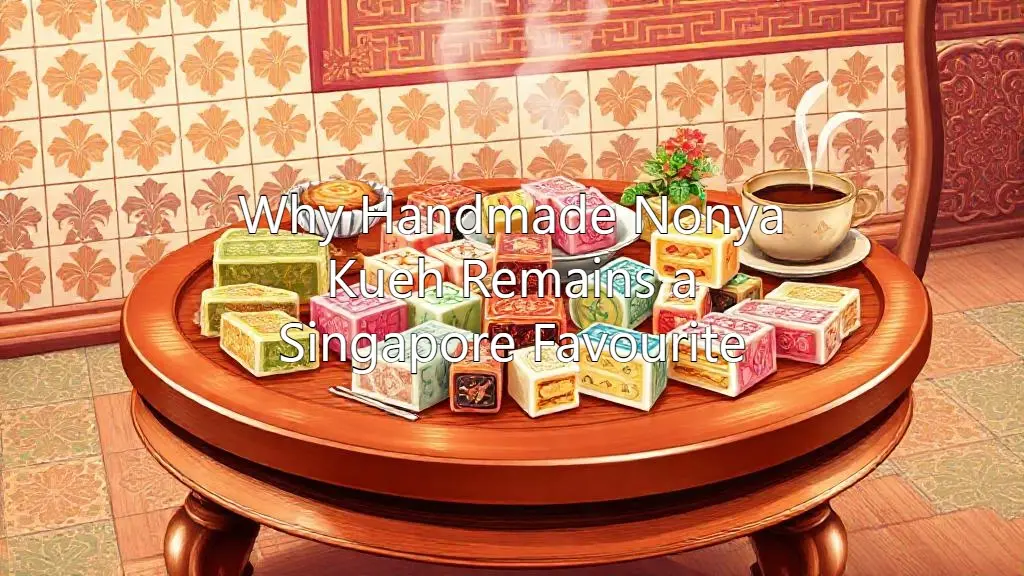
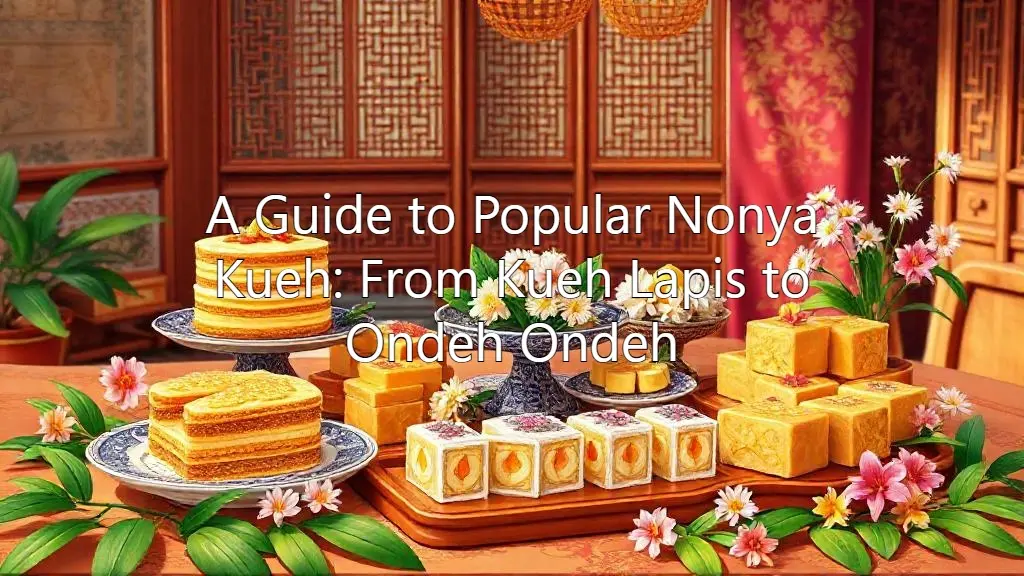

Imagine sinking your teeth into a delicate, rainbow-hued tower of Kueh Lapis, the layers of soft, moist cake melting in your mouth like a symphony of flavours and textures.
This is just the beginning of the vast and vibrant world of Nonya Kueh, a traditional dessert genre born from the culinary fusion of Malay, Chinese, and Indonesian influences in Singapore and Malaysia.
As you wander through the streets of Singapore, the aroma of steaming Kueh and the sound of sizzling coconut milk beckon you to embark on a sweet journey, one that will take you through the intricacies of Ondeh Ondeh, the gooey palm sugar centres of which explode in your mouth like a firework of flavours.
The popularity of Ang Mo Kio Nonya Kueh highlights the enduring appeal of traditional Peranakan snacks in Singapore. Made using time-honoured methods and quality ingredients, these delicacies continue to bring a sense of nostalgia while introducing younger generations to Singapore’s culinary heritage.
Exploring Peranakan Culture Through Traditional Nyonya Kueh Recipes
Peranakan culture is a unique blend of Malay and Chinese influences, and its traditional Nyonya kueh recipes play a vital role in preserving this legacy.
These sweet and savoury pastries are not only delicious but also carry a deep cultural significance, with each recipe passed down through generations of Nyonya women.
Discovering Popular Types of Nyonya Kueh Including Kueh Lapis and Ondeh Ondeh
In the heart of Singapore, a popular Nyonya kueh stall, known for its delicious and colourful treats, attracts a long queue of customers every morning, all eager to taste the famous Kueh Lapis and Ondeh Ondeh.
The stall owner, a third-generation Nyonya, takes great pride in preserving her family’s traditional recipes, passed down through generations.
The variety of Nyonya kueh is staggering, with each type offering a unique flavour and texture experience, from the soft and chewy Ondeh Ondeh to the layered and sweet Kueh Lapis.
As customers explore the different types of kueh, they can appreciate the intricate balance of flavours and textures that have been perfected over generations.
Uncovering the History and Cultural Significance of Ang Ku Kueh and Kueh Salat
Ang Ku Kueh, a traditional Singaporean snack, is like a treasure chest filled with cultural significance and historical stories, its delicate, soft skin and sweet fillings a testament to the city-state’s rich heritage.
The making of these traditional snacks is an art form, with each step, from the preparation of the filling to the shaping of the cake, requiring precision and patience.
As one takes a bite of Ang Ku Kueh or Kueh Salat, they are transported to a world of vibrant colors, textures, and flavors, a world that is both familiar and exotic.
The aroma of steamed Ang Ku Kueh wafts through the air, teasing the senses and enticing the taste buds, while the first bite of Kueh Salat is like a symphony of flavors, with the sweetness of the coconut milk and the savory flavor of the glutinous rice playing in perfect harmony.
To master the art of making Nyonya kueh at home, it’s essential to understand the basics of this traditional Singaporean dessert.
Nyonya kueh is a type of steamed cake made from rice flour, coconut milk, and sugar, flavored with pandan leaves, which give it a unique aroma and taste.
The process of making Nyonya kueh involves mixing the ingredients, steaming the cake, and then cooling it before serving.
By following simple recipes and techniques, anyone can learn to make delicious Nyonya kueh at home.
One of the key tips for making authentic Nyonya kueh is to use fresh pandan leaves, which can be found at most Asian markets or online.
To extract the flavor and aroma of the pandan leaves, they need to be blended with water and then squeezed to extract the juice, which is then added to the cake mixture.
The type of rice flour used can also affect the texture and flavor of the kueh, with some types of flour producing a softer and more delicate cake.
By experimenting with different types of flour and pandan leaves, you can find the perfect combination for your Nyonya kueh.
Finding the Best Places to Buy Nyonya Kueh in Singapore Including Katong and Joo Chiat
Exploring Singapore’s vibrant neighborhoods for authentic Nyonya Kueh is a must.
Visit Joo Chiat’s famous Kueh shops, offering a wide range of Nyonya delicacies.
From sweet treats to savoury delights, Singapore’s Nyonya Kueh scene has something for everyone, making it a culinary adventure worth embarking on.
Eating and Enjoying Nyonya Kueh with Recommendations for Portion Sizes and Freshness
To indulge in the delightful world of Nyonya kueh, one must consider the importance of freshness and portion sizes.
The vibrant colours and delicate flavours of these traditional Singaporean desserts are a treat for the senses — a symphony of textures and tastes that will leave you wanting more.
Freshness is key when it comes to enjoying Nyonya kueh, as the delicate flavours and textures can quickly become stale and unappetizing.
A dessert that’s both familiar and exotic at the same time — the combination of coconut milk, palm sugar, and pandan leaves creates a truly unique taste experience.
When enjoying Nyonya kueh, it’s essential to consider portion sizes: a small serving of 2-3 pieces is recommended to fully appreciate the nuances of each dessert.
Exploring Halal-Certified Bakeries for Nyonya Kueh Including Lek Lim and Kueh Ho Jiak
Contrary to the common belief that traditional Nyonya kueh cannot be halal, many bakeries in Singapore are now offering halal-certified versions of these classic desserts.
This shift challenges the long-held notion that Nyonya kueh must contain non-halal ingredients.
In reality, innovative bakeries are finding ways to adapt recipes to cater to a broader range of customers.
Some traditional Nyonya kueh recipes have been adapted to use halal-friendly ingredients, such as replacing lard with vegetable shortening, allowing everyone to enjoy these sweet treats.
70% of Singaporeans consider halal certification when choosing a bakery, indicating a growing demand for halal-friendly options in the market.
Mastering the Art of Nyonya Kueh with Ingredient Substitutions and Adapting Sweetness Levels
The traditional Nyonya kueh, a staple dessert in Singaporean cuisine, requires a delicate balance of ingredients and sweetness levels to perfect its intricate flavours and textures.
Mastering this art involves experimentation with various ingredient substitutions, such as substituting coconut milk with almond milk or adapting the amount of palm sugar to suit different tastes.
As one delves into the world of Nyonya kueh, it becomes apparent that the key to success lies in understanding the interconnectedness of each component, from the type of flour used to the cooking time, and making adjustments accordingly to achieve the desired consistency and flavour profile.
The adaptation of sweetness levels is crucial, as it can greatly impact the overall taste experience, and finding the perfect balance between sweet and savoury is an art that requires patience, practice, and a deep understanding of the ingredients and their interactions.
The art of crafting these delicate treats is a testament to the patience and skill of Nonya cooks, who have perfected their recipes over generations.
As we look to the future, we can’t help but wonder what innovative twists and flavours the next generation of Nonya kueh makers will bring to the table, while still honouring the traditional techniques that have made these kueh a staple of Singaporean culture.
With each bite of kueh, we are reminded of the importance of preserving cultural heritage and the joy of sharing in the love of food that brings people together.
As the aromas of steamed kueh and freshly grated coconut linger, we are invited to continue exploring the endless variations and nuances of Nonya kueh, a true delight that never fades.
Related to Nonya Kueh:
Why Traditional Herbal Ingredients Are Gaining Popularity in Modern Wellness