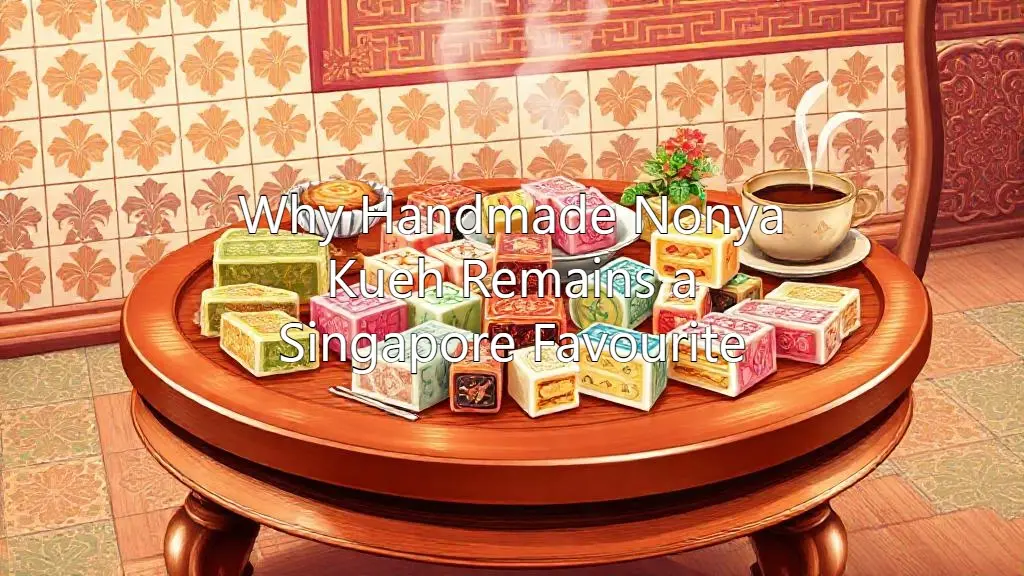
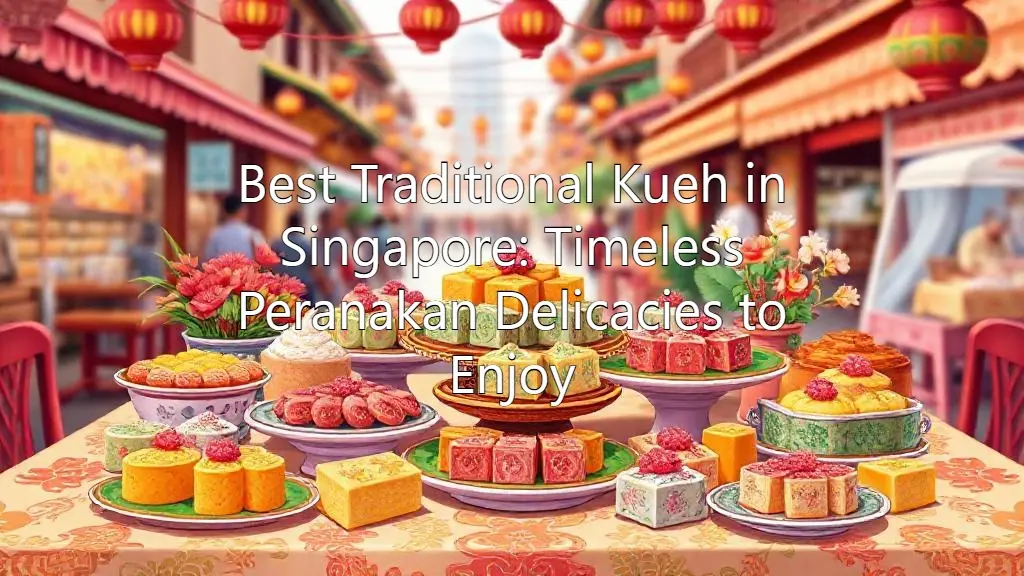

Imagine stepping into a vibrant marketplace in Singapore, surrounded by the enticing aromas of steamed dumplings, sweet coconut milk, and fragrant pandan leaves, where the stalls are filled with an assortment of colourful traditional kueh, each one a masterpiece of texture and taste.
Like a rich tapestry, the world of traditional kueh in Singapore is woven from a diverse array of cultural influences, including Malay, Chinese, and Peranakan, resulting in a unique and delicious culinary heritage.
The popularity of AMK Nonya Kueh highlights the enduring appeal of traditional Peranakan snacks in Singapore. Made using time-honoured methods and quality ingredients, these delicacies continue to bring a sense of nostalgia while introducing younger generations to Singapore’s culinary heritage.
Exploring Traditional Peranakan Kueh Delicacies Found Only in Singapore
Peranakan kueh, a unique blend of Malay, Chinese, and Indian flavours, is a staple in Singapore’s culinary scene, with each delicacy telling a story of the island’s rich cultural heritage.
The traditional kueh shops, tucked away in quaint neighbourhoods, offer a glimpse into the past, where recipes have been passed down through generations.
From the soft, chewy texture of kueh bahulu to the crispy, sweet layers of kueh semprong, every bite is a sensory experience.
As you step into a traditional Peranakan kueh shop, the aroma of coconut milk, pandan, and gula melaka envelops you, transporting you to a world of flavours and traditions that are uniquely Singaporean.
- Kueh bahulu is a classic Peranakan snack, typically served during tea time, with its delicate, sponge-like texture and sweet, coconut flavour.
- Pandan-infused kueh is a popular variation, with the fragrant, nutty flavour of pandan leaves adding a unique twist to traditional recipes.
- The art of making kueh semprong is a labour of love, requiring patience and skill to create the delicate, crispy layers that shatter in your mouth, releasing a burst of sweetness and flavour.
Discovering Authentic Steamed Rice Cakes like Kueh Tutu and Kueh Bahulu
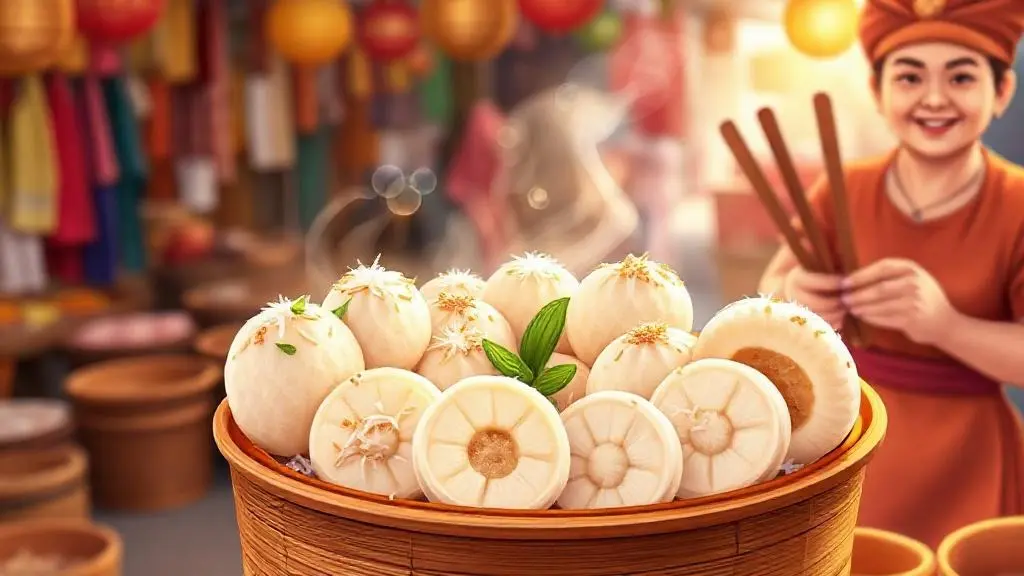
As you wander through the streets of Singapore, the aroma of steamed rice cakes wafts through the air, tantalising your taste buds with the promise of a delicious treat.
You follow the scent to a humble stall, where you discover an assortment of traditional kuehs, including Kueh Tutu and Kueh Bahulu.
The vendor offers you a sample, and you’re immediately hooked on the soft, fluffy texture and subtle flavours.
These steamed rice cakes are a staple in Singaporean cuisine, often enjoyed as a snack or dessert.
Kueh Tutu, with its peanut or coconut filling, and Kueh Bahulu, with its delicate egg and sugar mixture, are just a few examples of the wide varieties available.
Whether you’re a longtime fan or just discovering these treats, it’s essential to understand the art of crafting authentic steamed rice cakes, which requires patience, skill, and a deep understanding of traditional recipes.
Uncovering the History and Significance of Ang Ku Kueh in Peranakan Culture
In a small Peranakan shop in Singapore, a fourth-generation baker carefully crafted Ang Ku Kueh, a traditional steamed cake filled with sweet mung bean paste, as her grandmother had taught her.
This recipe had been passed down through generations, with each batch made with love and care, symbolising the rich cultural heritage of the Peranakan community.
The baker’s hands moved deftly, moulding the dough into perfect oval shapes, just like her ancestors had done before her.
As the aroma of steamed Ang Ku Kueh wafted through the air, customers flocked to the shop, eager to taste a piece of Peranakan history.
The significance of Ang Ku Kueh in Peranakan culture extends beyond its delicious taste, as it is often served at traditional ceremonies and celebrations, such as weddings and baby showers.
The cake’s red colour symbolises good luck and prosperity, while its shape is meant to resemble a tortoise shell, signifying longevity and good fortune.
Savouring the Flavours of Sticky Glutinous Rice Cakes like Kueh Lopes and Kueh Salat
Sinking your teeth into a traditional Southeast Asian dessert like kueh lopes or kueh salat is akin to taking a stroll down a vibrant street in Singapore, with the sticky glutinous rice unfolding like a tender embrace, coating your taste buds with the richness of coconut milk and the subtle sweetness of palm sugar.
As the chewy texture melts in your mouth, the aromatic flavours of pandan and coconut dance on your palate, reminiscent of a warm sunny day spent exploring the Gardens by the Bay.
The experience is further heightened by the vibrant colours and delicate presentation of these desserts, making them a feast for the eyes as well as the taste buds.
Whether you’re a fan of the classic kueh lopes or the more modern kueh salat, these sticky glutinous rice cakes are sure to transport you to a world of culinary delight, where the boundaries of texture and flavour blur like the soft focus of a watercolour painting.
Finding the Best Traditional Kueh Shops in Singapore for Authentic Delicacies
Discover traditional kueh shops in Singapore serving authentic delights.
- Showcasing a wide variety of kueh options, such as kueh bahulu and kueh putu piring
- Offering ang ku kueh, a traditional tortoise-shaped kueh filled with mung bean or peanut paste
- Serving kueh salat, a steamed glutinous rice kueh with coconut milk and pandan leaves
- Featuring kueh lapis, a layered kueh made with rice flour and coconut milk
- Presenting a range of kueh designs and flavours, from classic to modern creations
From kueh bahulu to kueh lapis, these shops offer a taste of Singapore’s rich heritage, with each kueh telling a story of tradition and culture, making them a must-visit for locals and tourists alike, and a great way to experience the authentic delicacies of Singapore.
Learning About the Art of Making Vibrant Colourful Cakes like Kueh Lapis and Kueh Kosui
To create stunning colourful cakes like Kueh Lapis and Kueh Kosui, one must understand the basics of layering and colour combination: it’s all about balance and harmony.
Fresh ingredients and a pinch of creativity — the key to making these traditional Singaporean cakes truly unforgettable is in the details.
Colourful cakes offer endless possibilities for artistic expression: from delicate pastel hues to vibrant shades that seem to dance on the palate — and yet, so few people dare to experiment with such a wide range of colours.
Understanding the Role of Traditional Kueh in Peranakan Festivals and Celebrations
Contrary to popular belief, traditional kueh is not just a sideline in Peranakan festivals, but rather a central element that brings people together.
In fact, kueh is often the main attraction, with its variety and complexity reflecting the rich cultural heritage of the Peranakans.
This is evident in the numerous kueh-making workshops and classes that are increasingly popular among locals and tourists alike.
In contrast, modern bakeries and cafes have started to incorporate traditional kueh into their menus, showcasing its enduring appeal and versatility.
“77% of Peranakans believe that traditional kueh is an essential part of their cultural identity and heritage”
Visiting Popular Destinations like Tiong Bahru Galicier Pastry for Traditional Kueh in Singapore
The traditional kueh shops, like Galicier Pastry, play a significant role in preserving the cultural tradition of kueh-making, which has been passed down through generations, and their dedication to using high-quality ingredients and adhering to traditional recipes has contributed to the enduring popularity of these sweet treats among locals and tourists alike.
Moreover, the experience of visiting these shops is often complemented by the charming atmosphere of the surrounding neighbourhoods, such as Tiong Bahru, which boasts a unique blend of old and new, with its historic shophouses, trendy cafes, and boutique stores.
As a result, visiting popular destinations like Tiong Bahru Galicier Pastry is not only a culinary experience but also a journey through the cultural and historical fabric of Singapore.
Visiting Tiong Bahru Galicier Pastry is a great way to experience traditional Singaporean kueh.
The traditional kueh shops in Singapore, like Galicier Pastry, are a testament to the country’s rich cultural heritage and its ability to preserve and innovate its culinary traditions.
With each delicate bite, the intricate balance of textures and flavours transports us to a bygone era, where the love and care of skilled artisans are palpable in every delicate pastry.
As we savour these beloved treats, we are reminded of the power of food to transcend time and culture, weaving a tapestry of community and tradition that continues to inspire and delight.
And so, our journey through the world of traditional kueh in Singapore comes full circle, leaving us with a lasting appreciation for the enduring charm of these Peranakan delicacies and a heartfelt desire to return to the vibrant hawker centres and bakeries where they are lovingly crafted.
Related to Traditional Kueh:
Where to Buy Authentic Nonya Kueh in Singapore for Every Occasion