


Singapore is known for its vibrant blend of cultures, where people from diverse ethnic and religious backgrounds live in harmony.
With a mix of ethnic Chinese, Malay, Indian, and other communities, the city-state celebrates its multiculturalism through shared traditions and festivals.
However, you might hear this every year: “Wait, it’s Hari Raya again? Didn’t we just celebrate it two months ago?”
That’s because there are two Hari Raya celebrations, Hari Raya Puasa and Hari Raya Haji.
Here’s a breakdown of all you need to know about these two special days and how they’re celebrated by Muslims in Singapore.
Hari Raya Is Not Only For The Muslims
In Singapore’s multicultural society, Hari Raya is primarily celebrated by the Malay-Muslim community.
Muslims in Singapore would come together with their family and friends to mark the joyous occasion.
These celebrations are filled with prayers, feasting, and the cherished tradition of seeking forgiveness from loved ones.
However, the beauty of Hari Raya in Singapore lies in how it brings people together across different races and religions.
Non-Muslim friends, colleagues, and neighbors often join the festivities by enjoying traditional Malay dishes and exchanging festive greetings.
What Is The Difference Between Hari Raya Puasa And Hari Raya Haji
Hari Raya Puasa (also known as Eid al-Fitr) and Hari Raya Haji (also known as Eid al-Adha) are both significant Islamic celebrations, but they mark different events.
Hari Raya Puasa
Hari Raya Puasa, also known as Eid al-Fitr, is a significant celebration marking the end of Ramadan, the Islamic month of fasting.
The word “Puasa” means fasting, and during this sacred month, Muslims fast from dawn to sunset.
Fasting is not just about abstaining from food and drink (yes, even water!).
It is a spiritual journey that promotes self-discipline, gratitude, and empathy for those in need while strengthening one’s connection with God.
In Singapore, the Islamic Religious Council (Majlis Ugama Islam Singapura or MUIS) announces the official date based on astronomical calculations.
Hari Raya Haji
Hari Raya Haji, also known as Aidiladha, is an important Muslim festival that falls on the 10th day of Zulhijjah, the 12th month of the Islamic calendar.
It honors Prophet Ibrahim’s devotion to Allah, as he was willing to sacrifice his son Ismail in obedience to God’s command.
A key tradition of this festival is korban, where livestock such as cows, sheep, and goats are sacrificed.
Timeless Traditions That Make Hari Raya Special
Prayers
Hari Raya typically begins with a special congregational prayer called Salat al-Eid, held at mosques, open fields, or large prayer grounds.
This prayer is a vital part of the celebration and marks the official start of Hari Raya.
It’s typically held in the morning, shortly after sunrise, and is accompanied by a sermon delivered by the imam.
Muslims gather in unity to offer thanks to Allah for granting them strength throughout the month of Ramadan.
The prayer is typically performed in a larger congregation, emphasizing the importance of community and togetherness.
Duit Raya
Duit raya, also known as “money gifts”, are typically given to children, young adults, and sometimes even to those in need.
It symbolizes good luck, blessings, and a fresh start for the year.
While the amount can vary, the real meaning behind it is about generosity and spreading joy.
Korban
In celebration of Hari Raya Haji, the tradition of korban (sacrificial slaughter) takes center stage.
Muslims around the world engage in korban, where livestock such as cows, goats, or sheep are sacrificed.
The meat is then shared among family, friends, and the less fortunate, ensuring that everyone, regardless of their financial standing, can partake in the joy of the celebration.
Korban is not just a ritual sacrifice, but a demonstration of compassion, charity, and solidarity with those in need.
Delicious Festive Feasts To Savor This Festival
Source: Pexels
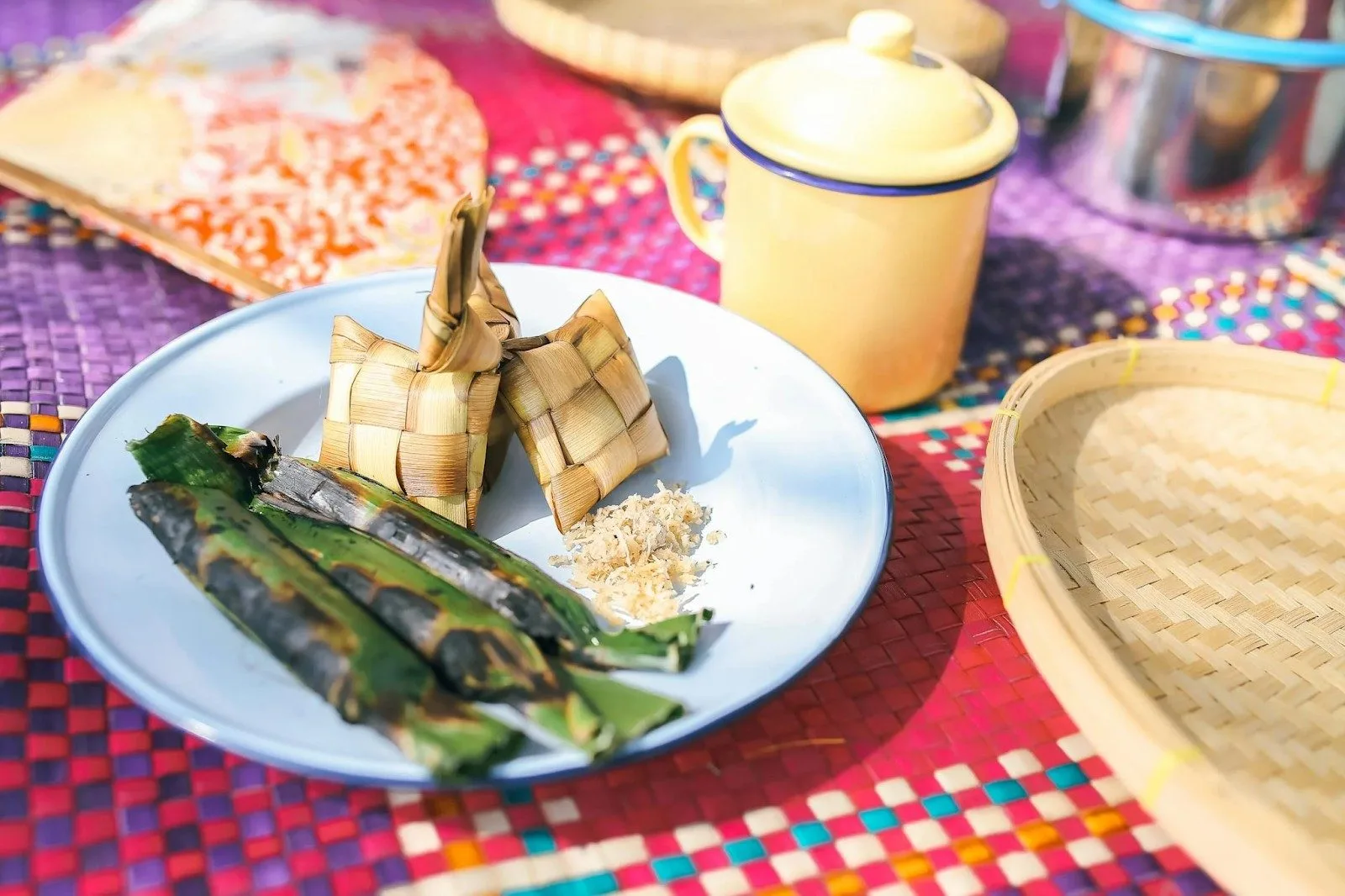
Hari Raya is a time for family, togetherness, and of course, delicious food.
After a month of fasting, the festive table is filled with a variety of traditional dishes that reflect the rich cultural heritage of the Muslim community in Singapore.
One of the most iconic dishes during Hari Raya is Beef Rendang, a slow-cooked stew made with tender beef, coconut milk, and a fragrant blend of spices.
It pairs perfectly with ketupat, compressed rice wrapped in a woven palm leaf, often served with sambal or peanut sauce for extra flavour.
For sweet treats, Kueh is a must.
Made from ingredients like rice flour, coconut milk, palm sugar, and pandan leaves, kueh is both a visual and culinary treat.
Popular varieties include pineapple tarts, kueh lapis (layered cake), and kueh bangkit (coconut biscuits), all enjoyed with family and friends.
Related to Hari Raya:
Embrace Abundance: Fertility Care During Chinese New Year in Singapore