

Did you know that swimming is another ability that some birds possess? 🤔
The discovery of webbed feet in certain bird species has sparked curiosity about their functionality and adaptability!
Examples of birds with webbed feet include ducks and geese, gulls, cormorants, loons, pelicans, penguins, boobies, and puffins.
All these birds have webbed feet! So what’s so special about them?🦆
Birds That Can Fly and Swim: The Webbed Feet Advantage
Without Webbed feet, birds would struggle to swim, and this is why they’re so crucial for aquatic birds!
Webbed feet provide them with a larger surface area to paddle underwater. It makes it a lot easier to propel themselves and change directions!
Also, birds would drown if they encounter water as they do not have the mechanism needed to survive. But why is that the case?
Well, It’s because they do not possess waterproof feathers, which ends up dragging them down into the water.
Their wings aren’t the right shape or strong enough to be used as paddles, and their legs and feet lack the structure and strength to help them out.
What Enables A Birds To Swim?
When it comes to swimming, birds require these three main mechanisms: wing-propulsion, foot-propulsion, and plunge-diving.
Bird species like penguins and auks use their wings to propel themselves beneath the waves.
💡Did you know that penguins also have waterproof wings that allow them to survive underwater and keep them warm? 🐧
While grebes and loons use foot propulsion, kicking with their strong webbed feet to move forward.
On the other hand, we have these sharp and accurate hunters – Gannets and boobies, that plunge-dive into the water to hunt for food!
Webbed Feet: A Marvel of Evolution
Source: Pexels
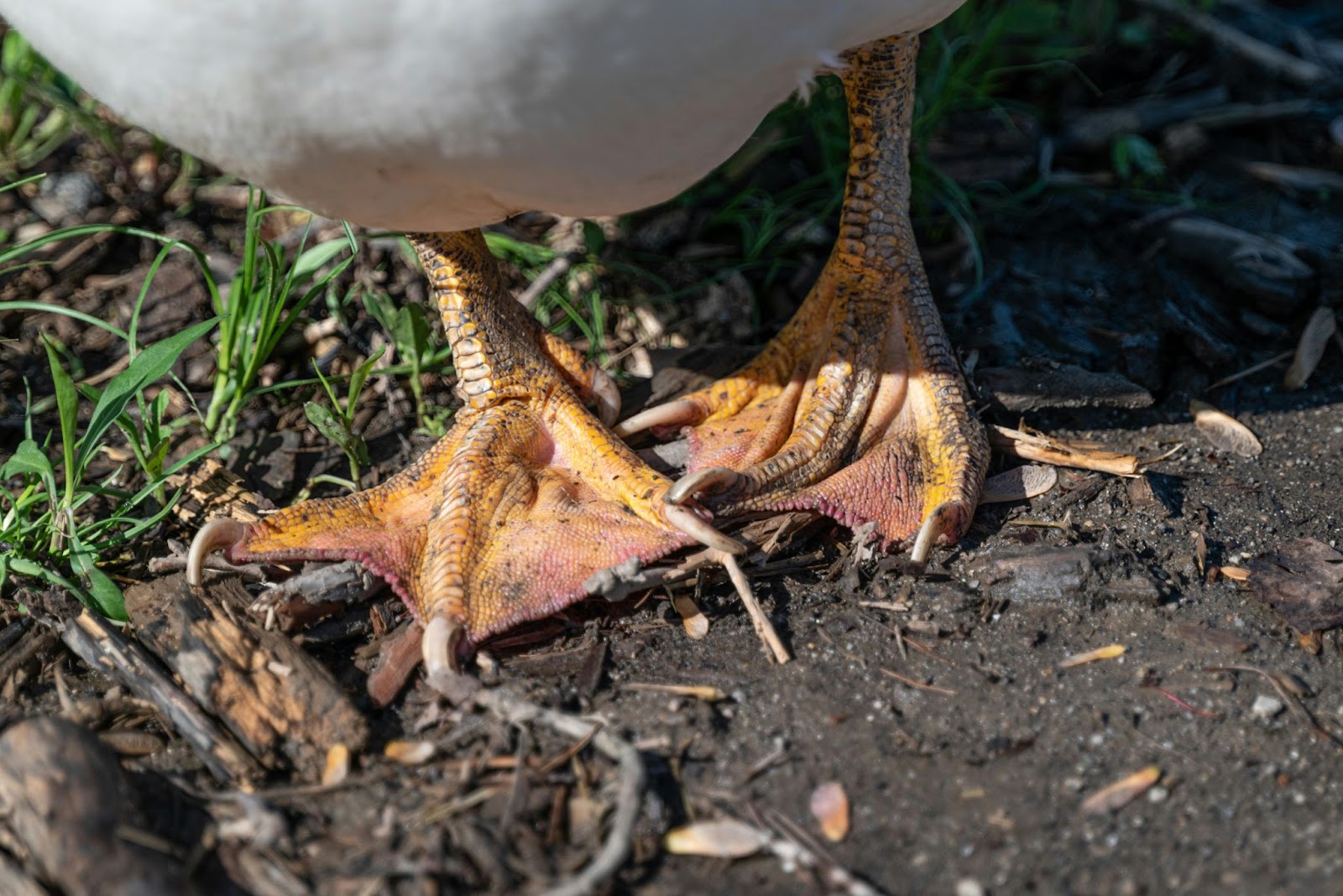
Webbed feet are what birds develop in their species to adapt better to their environment.
These feet are ideal for birds that swim, whether on the water’s surface or underwater!
Their toes are connected with a thin layer of skin which helps these birds to steer and move efficiently underwater
Now we know why natural selection is so impactful- it has developed many bird species!
The Exceptions to the Rule – Not All Birds Fly!
It’s quite shocking to hear that some birds can’t fly, because they’re, you know, after all, birds 🤔
But they do exist!
A great example is the Ostrich AKA the largest living bird.
Did you know they could grow up to 9 feet tall and weigh 300 pounds? 🫨
And because of how massive it is, running is a much more feasible mode of travel for Ostrich— they can run at speeds of up to 45 mph!
Penguins whose wings may not be suitable for flying, but have evolved into flippers that help them swim quickly and avoid predators.
So How Did Some Birds Lose The Ability To Fly
One reason is that flying requires a significant amount of energy and resources.
In environments where food is scarce or predators are abundant, the energy spent on flying could be better allocated to other survival strategies like running or swimming.
Additionally, flying requires specific physical adaptations, such as lightweight bones, powerful muscles, and efficient respiratory systems.
The Evolution of Bird Species
The diverse groups of birds that we see today are thanks to how intelligent and adaptive these bird species are. Every species is remarkable for being able to grow and adapt to the specific environment they are in!
In the end, the ability to fly or swim is not a prerequisite for being a bird.
Whether they soar through the skies or paddle through the water, birds are incredibly resilient and adaptable creatures that continue to fascinate us. 🐦
Related to animals: