

How Industry Networks Strengthen Singapore’s Manufacturing Sector
Singapore’s manufacturing sector is strengthened by the intricate networks of industries that underpin its economy.
With a remarkable 22% of its GDP attributed to manufacturing, the city-state’s industrial landscape is a testament to the power of strategic connections and collaborations.
The concept of industry networks is not new, but its application in Singapore’s manufacturing sector has been particularly noteworthy, fostering a culture of innovation, efficiency, and competitiveness that has enabled the country to thrive in an increasingly complex global market.
By examining the dynamics of these industry networks, insight can be gained into the secrets behind Singapore’s manufacturing success.
Collaborative Ecosystems Driving Singapore’s Industrial Transformation
Singapore’s manufacturing sector is poised for significant growth, driven by the government’s initiatives to foster innovation and collaboration among industry players, as well as investments in cutting-edge technologies.
The sector’s transformation is expected to create new opportunities for businesses and workers, contributing to the country’s economic development.
As the industry continues to evolve, companies need to adapt and thrive in a rapidly changing environment.
- Innovation is key to unlocking the sector’s full potential, with advancements in areas like artificial intelligence and robotics set to play a crucial role.
- Industry 4.0 technologies are being increasingly adopted, enabling manufacturers to enhance efficiency, productivity, and competitiveness.
- Strategic partnerships between companies, research institutions, and government agencies will be vital in driving growth and addressing emerging challenges.
Fostering Innovation and Growth in High-Value Added Industries Like Electronics
Source: pexels
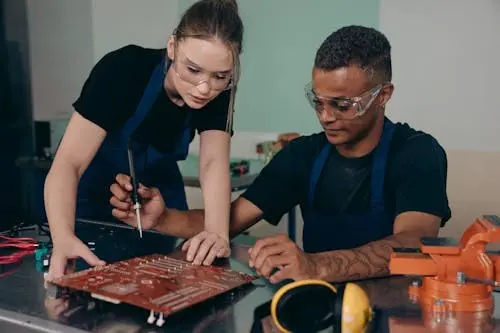
The ever-evolving landscape of electronics is driving companies to stay ahead of the curve and capitalise on emerging trends.
To achieve this, it is essential to understand the complexities of high-value-added industries like electronics, where innovation and precision are paramount.
By embracing cutting-edge technologies and fostering a culture of innovation, new opportunities for expansion and diversification can be unlocked.
This might involve exploring new materials, manufacturing processes, or product designs that cater to shifting consumer demands.
The Role of Industry Platforms in Strengthening Manufacturing Capabilities
Beyond infrastructure and location advantages, Singapore’s manufacturing sector is reinforced by strong industry networks that facilitate collaboration, knowledge exchange, and capability development.
Industry platforms and trade associations play a crucial role in connecting manufacturers, suppliers, technology providers, and solution partners within a shared ecosystem.
For instance, initiatives such as the Singapore manufacturing technology platform organised by MTA provide curated exhibitions, technical seminars, and business-matching opportunities that enable firms to explore emerging technologies and strengthen regional partnerships.
Through these structured engagements, companies remain responsive to regulatory shifts, global market trends, and Industry 4.0 developments.
By fostering partnerships and encouraging innovation-driven collaboration, industry associations contribute to a more resilient and competitive manufacturing landscape in Singapore.
Tapping into Skilled Workforce and Talent Pool through Industry Networks and Initiatives

Source: pexels
To effectively tap into a skilled workforce and talent pool, it is essential to leverage industry networks and initiatives, which can provide access to a vast array of professionals with specialised skills.
This can be achieved by participating in industry conferences, joining professional associations, and engaging with online communities related to the field.
By doing so, businesses can stay up-to-date with the latest trends and developments, while also identifying potential talent and building relationships with key players in the industry.
Government Initiatives and Incentives for Research and Development in Manufacturing
The government is supporting innovation in manufacturing through various programs.
- Funding research grants to encourage the development of new technologies.
- Providing tax incentives for companies investing in research and development.
- Encouraging collaboration between industries and academic institutions through partnerships.
- Offering resources and support for small and medium-sized enterprises to innovate.
- Developing infrastructure to support the growth of manufacturing industries.
Industry 4.0 Technologies Adoption and Implementation in Singapore’s Manufacturing Sector
The Singapore government has been actively promoting the adoption of Industry 4.0 technologies.
The successful implementation of these technologies is crucial for Singapore’s manufacturing sector to remain competitive and thrive in the digital age.
In recent years, many Singaporean manufacturers have started to invest in emerging technologies like artificial intelligence, robotics, and the Internet of Things.
Enhancing Competitiveness through Global Networking and Strategic Partnerships in Manufacturing
Fostering global connections and strategic partnerships has become a cornerstone for enhancing competitiveness, as it enables companies to leverage a diverse pool of skills, technologies, and market insights to stay ahead of the curve.
Through these alliances, manufacturers can not only expand their market reach but also accelerate innovation, mitigate risks, and capitalise on emerging trends, ultimately leading to sustainable growth and profitability.
In conclusion, Singapore’s manufacturing sector continues to evolve, with the role of industry networks in driving growth and innovation remaining paramount.
Related to Industry:
The Rise Of Huawei: How Huawei Excelled in the Smartphone Industry
Eco-Friendly Air Travel: Aviation Industry’s Green Revolution