

Ever thought walking was boring? 🤔
Think again!
Racewalking combines speed, technique and endurance to create one of the world’s most fascinating and unique sports.
With strict rules that test every athlete’s precision and a pace that will leave you amazed, this isn’t your average stroll in the park—it’s a high-stakes race to the finish line!
Let’s Take A Walk Down Memory Lane On The Origins Of Racewalking
In the Victorian era, pedestrianism, as it was known, was a popular spectacle sport in the United States, with participants walking nearly 1,000 kilometres in six days inside packed indoor arenas.
The activity was eventually formalised in England, with basic rules established, and racewalking was soon recognised as a sport for professionals.
From there, Racewalking has made its way to the Olympic Games, where it has been a constant fixture since 1904.
Racewalking differs significantly from running, where athletes often have both feet off the ground during their strides.
When racewalking, athletes must always have one foot in contact with the ground at all times, as visible to the human eye. 👀
Judges are present at events to ensure the rule is enforced, and if there is no visible contact, it is deemed as ‘lifting’ and attracts a penalty.
Furthermore, the athlete’s knee of their advanced leg must not bend, and the leg must straighten as the body passes over it.
Each racewalker is judged carefully and can be penalised if they bend their knee during the race.
Isn’t It Just Power Walking? Captain Raymond Holt In Brooklyn 99 Made it Look Easy
Racewalkers are a special breed of athletes who have honed their craft to perfection. 💯
They possess an extraordinary level of aerobic resistance, which enables them to sustain a rapid pace over long distances.
The key to successful racewalking lies in the ability to walk at an incredible speed while adhering to a strict set of rules.
This involves maintaining a rhythmic pace, avoiding sprinting, and ensuring that one foot remains in contact with the ground at all times.
Unlike other forms of athletics, racewalking is as much a mental challenge as it is physical.
Athletes need to develop a high level of endurance, both physically and mentally, to push through the pain and fatigue that comes with competing at such a high level.
It is this mental toughness that sets racewalkers apart from other athletes.
Channelling Your Inner David Goggins For Racewalking

Source: Pexels
Racewalking is an incredibly physically demanding sport, requiring athletes to maintain a high level of aerobic fitness. 🧘
To achieve this, racewalkers need to develop strong cardiovascular systems, which enable them to supply oxygen to their muscles efficiently.
This is particularly important during long-distance events, where athletes need to sustain their pace over an extended period.
As mentioned earlier, racewalking is as much a mental challenge as it is physical.
Athletes need to develop a high level of mental toughness to push through the pain and fatigue that comes with competing at such a high level.
It often involves developing strategies to cope with mental and physical demands, such as visualisation techniques, positive self-talk, and breathing exercises.
It’s Just Walking…Even My Grandma Can Do It, Right? Maybe Not
For racewalking, there will be approximately 5 to 9 judges who inspect the race.
They carry paddles with symbols for ‘loss of contact’ (~) and ‘bent knee’ (<).
If a racewalker is shown three warnings (paddles) from different judges, including the chief judge, it leads to the disqualification of the athlete.
A red paddle is shown to the disqualified athlete.
The standard distances for racewalking events are 3000m and 5000m in indoor tournaments, while 5000m, 10,000m, 20,000m, and 50,000m races are held on outdoor tracks.
Is Racewalking Even Part Of The Olympics?
Source: Pexels
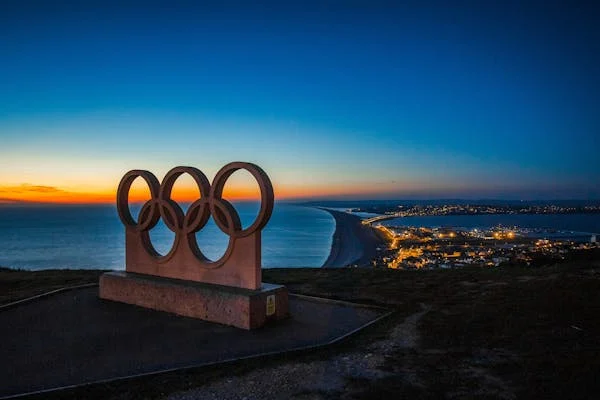
Racewalking made its debut at the Olympics in 1904 in St. Louis, USA, but it was clubbed as a part of the ‘All-Around Championship’—today’s version of the decathlon.
It made its debut as a standalone sport at the 1908 Games in London as a men’s event, featuring a 3500-meter and a 10-mile race walk.
A 10km short-distance walk was introduced at the 1912 Summer Olympics in Stockholm, and the 50km long-distance event made its first appearance at the 1932 Games in Los Angeles.
In the 1956 Olympics in Melbourne, the second category of racewalking, the 20km, was introduced.
Eventually, a women’s category was added at the 1992 Barcelona Games in the form of a 10km event.
Which was upgraded to the 20km at the Sydney 2000 Summer Olympics.
At Paris 2024, the men’s only 50km race walk event was replaced by the marathon race walk mixed relay, which is contested by teams comprising one man and one woman.
The 42.195km course requires each athlete to complete two legs each in the following order: male 11.45km, female 10km, male 10km, and female 10.745km.
The Usain Bolts Of Racewalking At The Olympics When It First Started
Source: Pexels
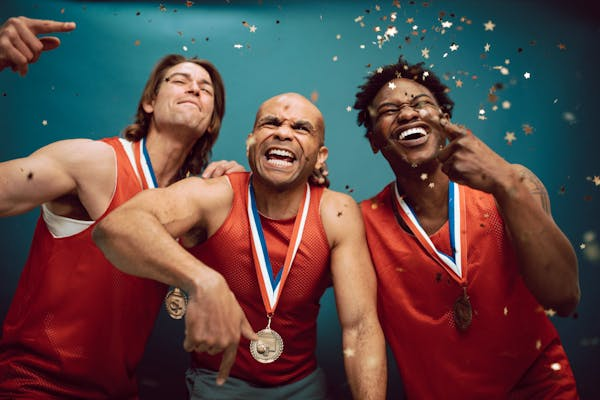
British athlete George Larner won the first gold medal in racewalking in the men’s 10-mile category at the 1908 London Games.🥇
He also claimed gold in the 3500-meter race.
At Stockholm, four years later, George Goulding of Canada took the gold in the Olympics’ first 10-kilometer walk.
In the maiden 50km race walk at Los Angeles in 1932, Britain’s Tommy Green claimed the first Olympic gold, while the Soviet Union’s Leonid Spirin became the first winner in the 20km category in 1956.
China’s Chen Yueling won the first gold in the 10km women’s race in 1992, while Wang Liping clinched the first gold in the women’s 20km race walk in 2000.
Racewalking Into The Future, What Will Racewalking Look Like?
Source: Pexels
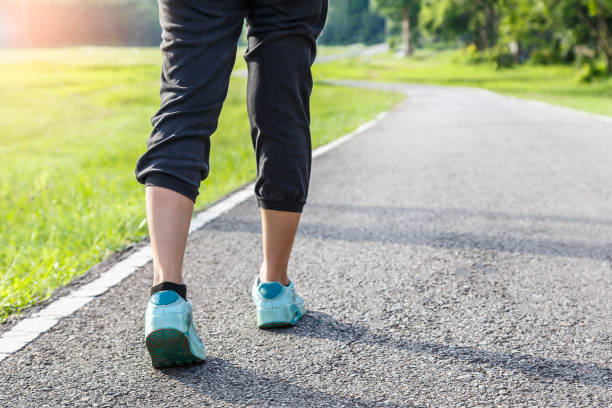
As the sport continues to grow in popularity, it’s clear that racewalking has a bright future ahead.
With its unique blend of physical and mental challenges, it’s a sport that appeals to athletes and spectators alike.
Whether you’re a seasoned athlete or just starting, racewalking offers a unique opportunity to push yourself to new heights and achieve greatness.📈
Related to Racewalking:
Tchoukball Explained: The Ultimate Guide To The Sport
The Ultimate Beginner’s Exercise Guide To Building Your Dream Body