

Imagine stepping into the shoes—or rather, the hands—of a legendary monkey warrior, leaping through mystical landscapes, wielding a magical staff, and taking on colossal foes straight out of Chinese mythology. 🐒✨
That’s the exhilarating experience Black Myth: Wukong delivers, and the world can’t get enough of it.
In just three days, this game sold over 10 million copies, smashing records and becoming the most successful title ever to emerge from China.
With an estimated $800-900 million in revenue, this masterpiece doesn’t just entertain, it introduces players to a rich tapestry of Chinese folklore, bringing ancient tales to life in ways the gaming world has never seen before.
Black Myth: Wukong isn’t just a game; it’s a global phenomenon that lets you unleash your inner monkey king and conquer the impossible. 🎮🔥
The World Is Going Bananas For Black Myth: Wukong
Developed by Game Science, Black Myth: Wukong is China’s first AAA video game, with a reported production cost of $70 million over six years.
The game’s meteoric popularity has been phenomenal, with 18 million copies sold since its August 20 release.
Black Myth: Wukong has garnered significant attention for its single-player action gameplay, stunning visuals, and appealing graphics.
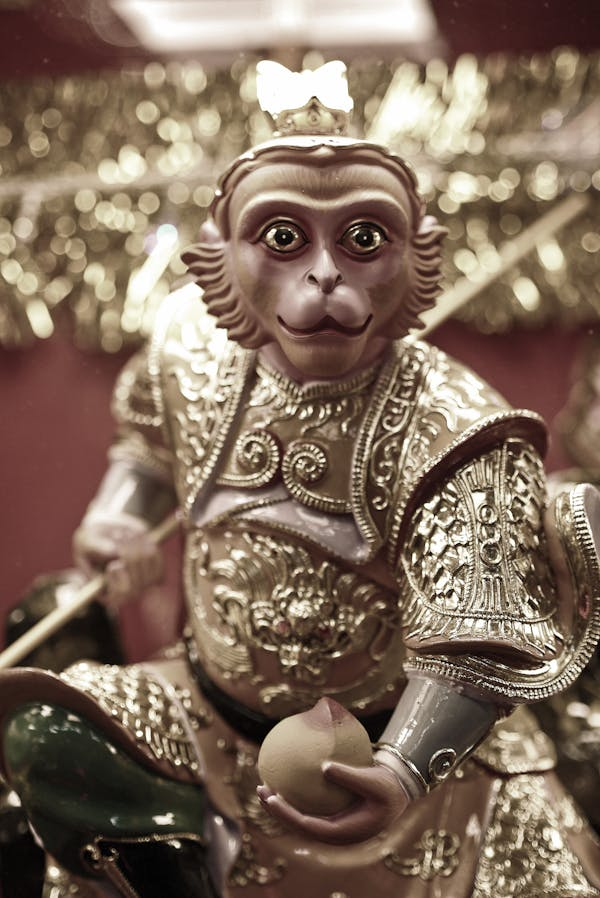
Inspired by the classic 16th-century Chinese novel Journey to the West, the game follows the story of Sun Wukong, the Monkey King, as he embarks on an epic journey to retrieve lost relics.
Players take on the role of “The Destined One,” an anthropomorphic monkey with supernatural shape-shifting powers and combat techniques.⚔️
Not Purely Monkey Business, But Also A Cultural Significance
The game’s success is not only a testament to its engaging gameplay but also a reflection of China’s growing influence in the global gaming industry.
Black Myth: Wukong has sparked a national conversation on China’s soft power and the arrival of Chinese games on the global stage.
China’s state-run Global Times reported that the game has shone “a global spotlight on China’s ancient wonders.”
Many in China’s gaming industry view the game as a source of national pride, celebrating Chinese culture and pushing back against Western dominance in gaming.
Game developers in China are driven by nationalistic sentiment, promoted by Chinese state propaganda, that “we Chinese are as good as (and maybe better than) foreigners, so whatever foreigners achieve, we can achieve as well.”
This sentiment has propelled the development of games like Wukong, which has the potential to build momentum in the local gaming sector. 📈
“With the continued emergence of successful cases including Black Myth: Wukong, more investment and resources will focus on the Chinese gaming industry,” Mei Bo, senior game producer and founder of a gaming startup, told the Global Times.
Is Any Publicity Good Publicity? The Controversy Behind Black Myth: Wukong
Source: Pexels
However, the game’s success has not been without controversy.
In November, IGN reported on an alleged history of sexist posts that went public from some of Black Myth: Wukong’s developers.
Additionally, the guidelines for “socially appropriate” posts issued by the game’s developer for influencers and streamers have prompted criticism.
Such guidelines are rare or even unprecedented for major games, according to industry insiders.
The full list of guidelines has sparked a heated debate, with some describing them as “ridiculous” due to concerns about censorship.🤬
China Has Tossed Its Hat Into The AAA Title Games With Black Myth: Wukong
The success of Black Myth: Wukong has significant implications for the gaming industry.
It signals that Chinese studios are ready to compete directly with established Western and Japanese developers in the premium AAA space.
Game Science’s transition from mobile game development to creating a world-class AAA title, backed by heavyweights like Tencent and Hero Games, is a path that many Chinese game developers are already trying to follow with growing success.
Black Myth: Wukong Reflecting The Slow Shift In Customer Preference In China
Black Myth: Wukong’s popularity also reflects changing consumer preferences within China.
According to Niko Partners 2024 China Gamer Behavior & Market Insights Report, free-to-play games accounted for nearly 90% of total player spending last year, with mobile accounting for 68.7% of total spend and over 90% of players.
Overturning the console ban in 2014, access to the international version of Steam, the shift to digital distribution, high-quality single-player and multiplayer game offerings, localised payment methods, and regional pricing have been key drivers of premium game adoption in China.
Overwatch (2016), which is one of the first successful premium games in China, have shown that Chinese players are willing to pay for premium experiences, and Black Myth: Wukong further solidifies this trend. 💸
While the console has historically remained niche in China, despite the overturning of the console ban in 2014, the PlayStation 5 is selling 2x faster than its predecessor in the country and has become an established platform alongside the Nintendo Switch.
First, Overwatch. Then, Black Myth: Wukong. So, What’s Next From China?
The success of Black Myth: Wukong represents a significant shift in the global video game landscape for both Chinese and non-China-based developers.
It highlights the growing capabilities and ambitions of Chinese game development studios and their ability to compete on the global stage. 🌍
While non-China-based developers will need to acknowledge and contend with these new challenges, it also represents an opportunity for collaboration and learning.
As the gaming industry continues to evolve, one thing is certain – Black Myth: Wukong has left an indelible mark on the global gaming landscape, and its impact will be felt for years to come.
Related to Black Myth: Wukong: