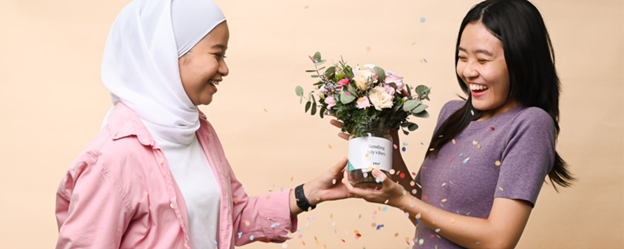

Roses are red, violets are blue, and flowers are the ultimate symbol of love and beauty.
They come in a variety of shapes, sizes, and colours, each with its unique characteristics and meanings! 💐
Flowers have been a symbol of beauty and elegance for centuries, and it’s no wonder why they’re still a popular choice for bouquets and decorations today!
Unraveling the Symbolism of Flowers
The history of flower meanings dates back to ancient Greece, Rome, Egypt, and China, where mythologies, folklore, sonnets, and plays featured flower and plant symbolism.
In the Victorian era, learning the special symbolism of flowers became a popular pastime, with guidebooks available to decipher the “language.”
Flowers were primarily used to deliver messages that couldn’t be spoken aloud, following the protocol of Victorian-era etiquette.
A “yes” answer came in the form of flowers handed over with the right hand, while a “no” answer was conveyed by using the left hand.
Plants could also express aversive feelings, such as the “conceit” of pomegranate or the “bitterness” of aloe.
Flower Meanings and the Victorian Era
During the Victorian era, flowers were used to convey secret messages, with the way they were presented and conditioned holding significant importance.
If flowers were given upside down, the conveyed idea was the opposite of what was traditionally meant.
The way the ribbon was tied also held meaning: tied to the left, the flowers’ symbolism applied to the giver, whereas tied to the right, the sentiment was about the recipient.
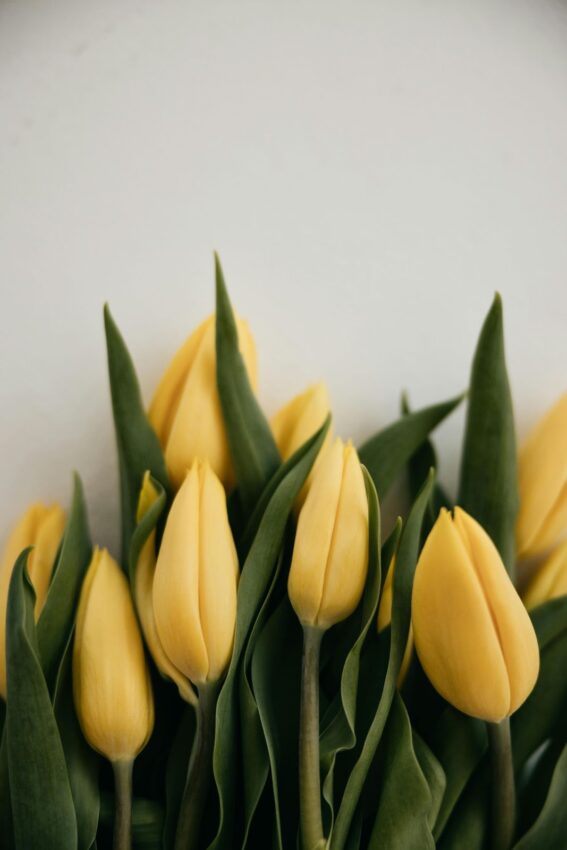
More examples of plants and their associated human qualities during the Victorian era include bluebells and kindness, peonies and bashfulness, rosemary and remembrance, and tulips and passion.
Source: Pexels
The meanings and traditions associated with flowers have certainly changed over time, and different cultures assign varying ideas to the same species.
Still, the fascination with “perfumed words” persists just the same.
This language was often used by lovers to express their feelings, and by friends to show appreciation and gratitude.
The Cultural Significance of Flowers
Flowers have played a significant role in various cultures and traditions.
In ancient Greece, for example, flowers were used to honour the gods and goddesses. In Hinduism, flowers are offered to deities as a form of worship.
In many Asian cultures, flowers are used in traditional medicine and are believed to have healing properties.
In the Western world, flowers are often associated with romantic love and courtship. They are used to propose, to apologize, and to express gratitude! 🤗
Flowers are also used in funerals and memorial services to pay respect to the deceased.
Flower Colors and Their Meanings
Flowers provide an incredibly nuanced form of communication, with some plants expressing a wide range of emotions based on their colour alone.
Red roses symbolize love and desire, but roses come in a variety of colours, and each has its meaning. White roses signify purity, innocence, reverence, a new beginning, or a fresh start.
Deep, dark crimson roses represent mourning, while pink roses convey grace, happiness, and gentleness.
Yellow roses express jealousy or infidelity, and orange roses signify desire and enthusiasm. Lavender roses mean love at first sight, and coral roses represent friendship, modesty, and sympathy.
Flowers are a universal language that transcends cultural and linguistic barriers. They evoke emotions, convey messages, and bring people together.
Whether it’s a simple bouquet or an elaborate arrangement, flowers have the power to make us feel seen, heard, and appreciated. 💐 click here to find out more!
Articles to flowers:
The Best Flowers To Decorate Your Home With
Buying Flowers Doesn’t Have To Be Hard. Here’s How To Make It Hassle-Free!