


World Expos have always been about big ideas and even bigger dreams.
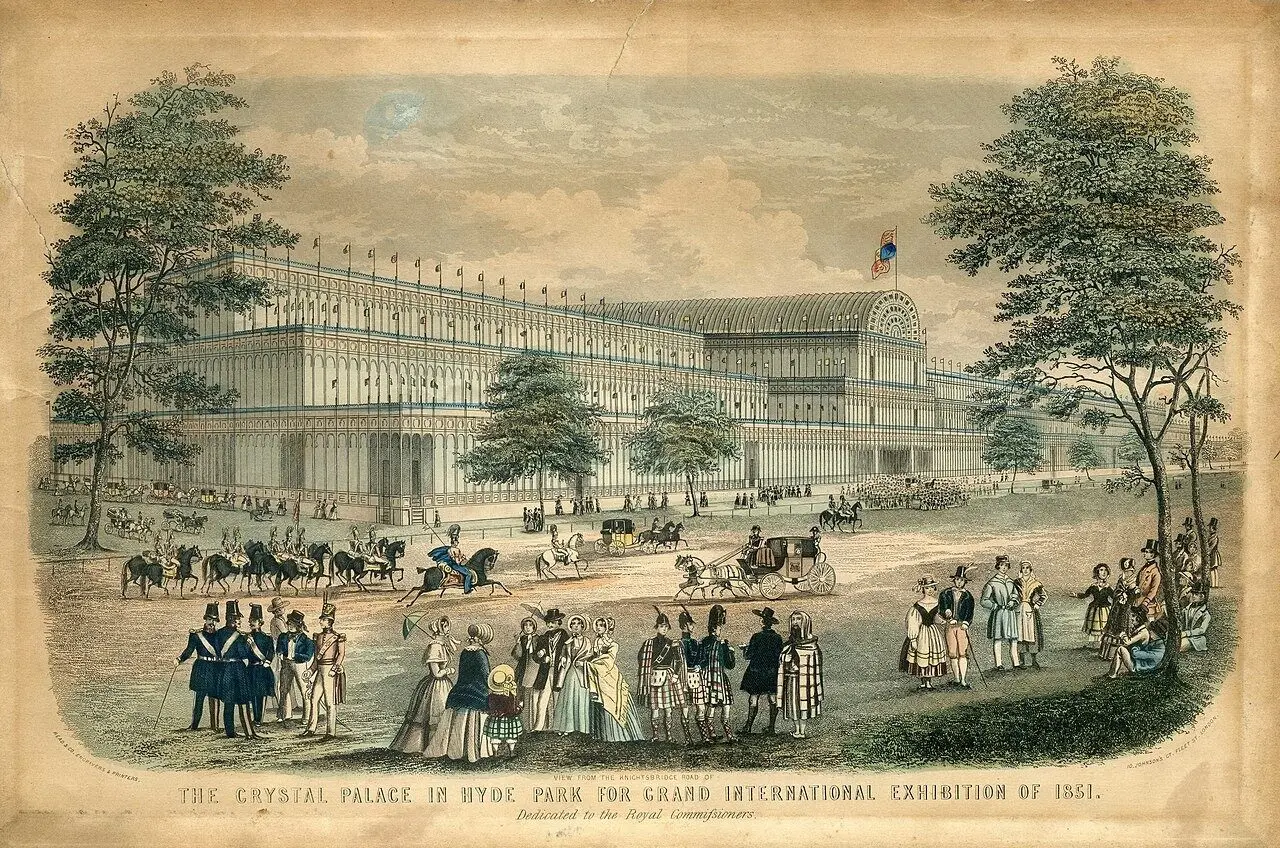
It all started back in 1851, when London hosted The Great Exhibition inside the glittering Crystal Palace.
A grand showcase of inventions and progress from the Industrial Revolution.
Since then, each Expo has captured the imagination of its time, from Paris 1889’s Eiffel Tower debut to Shanghai 2010’s futuristic cityscapes and Dubai 2020’s focus on sustainability.
More than just massive exhibitions, they’ve become global snapshots of how humanity envisions its future.
Now, all eyes turn to Osaka 2025, themed “Designing Future Society for Our Lives”, and then to Riyadh 2030, which promises to carry that spirit of innovation into a new era.
And with contenders already lining up for Expo 2035, the story of the World Expo is far from over; it’s still evolving with every generation.
The Birth Of A Global Showcase
Source: Wikipedia
World Expos began in 1851, when London hosted The Great Exhibition, the first event of its kind and a bold celebration of human progress.
Backed by Prince Albert and Queen Victoria, the exhibition aimed to showcase the best of industry, art, and design from around the world.
Its venue, the iconic Crystal Palace, was a marvel in itself, a massive glass-and-iron structure built in just nine months, symbolising the spirit of innovation that defined the age.
Inside, visitors found over 100,000 exhibits from more than 30 countries, featuring everything from cutting-edge steam engines to handcrafted goods.
The event was a massive success, attracting over six million visitors and setting the tone for future World Expos as grand stages of creativity and collaboration.
Beyond the spectacle, it marked a new kind of internationalism, one that celebrated shared progress and global exchange.
The Great Exhibition didn’t just display inventions; it inspired them, showing the world what could happen when nations came together in the pursuit of innovation.
That legacy continues today, nearly two centuries later, through the ever-evolving tradition of World Expos.
Icons Of Innovation: The Most Memorable Expos In History
After London’s success, other nations were quick to embrace the idea of hosting their own World Expos, each one reflecting the dreams and discoveries of its time.
Paris 1889 remains one of the most iconic, forever remembered for unveiling the Eiffel Tower, which was originally built as a temporary structure for the fair.
Decades later, New York’s 1939 and 1964 World’s Fairs captured the optimism of the modern age.
Introducing the public to groundbreaking ideas like television, nylon, and the futuristic “World of Tomorrow.”
As technology and global connections grew, so did the scale of these expos.
Expo 1970 in Osaka showcased Japan’s rise as a technological leader.
While Expo 2010 in Shanghai became the largest in history, drawing over 73 million visitors under the theme “Better City, Better Life.”
More recently, Expo 2020 Dubai (held in 2021–2022 due to the pandemic) highlighted innovation and sustainability, marking the first World Expo hosted in the Middle East.
Each of these milestones shows how World Expos are more than grand exhibitions.
They are time capsules of human ambition, reflecting how society imagines progress and the future at every turn.
From Past To Present: The Evolution Of World Expos
Over the years, World Expos have evolved far beyond industrial showcases.
What began as exhibitions of machinery and invention in the 19th century gradually transformed into global platforms for dialogue, sustainability, and culture.
The focus shifted from showing what nations could make to sharing ideas about how the world could live, connect, and grow together.
By the late 20th century, expos began to embrace themes that looked beyond technology, addressing issues like urban living, the environment, and social progress.
Expo 2000 in Hanover centred on “Man, Nature, and Technology,” while Expo 2010 in Shanghai explored the challenges of rapid urbanisation.
However, Expo 2020 Dubai then pushed boundaries even further, merging physical exhibitions with digital experiences and global participation.
Today’s expos are immersive and forward-looking, blending art, science, and sustainability.
They serve as spaces where nations collaborate on solutions for shared global challenges from climate change to digital inclusion.
In a way, the evolution of the World Expo mirrors humanity’s own journey: from industrial invention to collective innovation, where creativity and cooperation take centre stage.
Osaka 2025: Designing Future Society For Our Lives

Source: Japan House
The next World Expo will take place in Osaka, Japan, from April 13 to October 13, 2025, under the theme “Designing Future Society for Our Lives.”
This marks a meaningful return for Osaka, which last hosted Expo ’70, an event remembered for its futuristic vision and groundbreaking technology.
Now, more than fifty years later, Japan is once again set to showcase how innovation can shape a better world.
Expo 2025 aims to explore how technology, sustainability, and human creativity can work together to improve everyday life.
Its three subthemes, Saving Lives, Empowering Lives, and Connecting Lives, highlight a people-centred approach to progress.
The expo site, located on Yumeshima Island in Osaka Bay, is being designed as a model for smart, sustainable living, featuring cutting-edge architecture and renewable energy systems.
More than 150 countries and regions are expected to participate, making it a truly global event.
For Japan, Expo 2025 isn’t just about looking ahead.
It’s about continuing its legacy of innovation and cultural exchange, showing how the world can come together to build a brighter, more connected future.
The Next Chapter: Saudi Arabia’s Expo 2030
Source: Royal Commission for Riyadh City
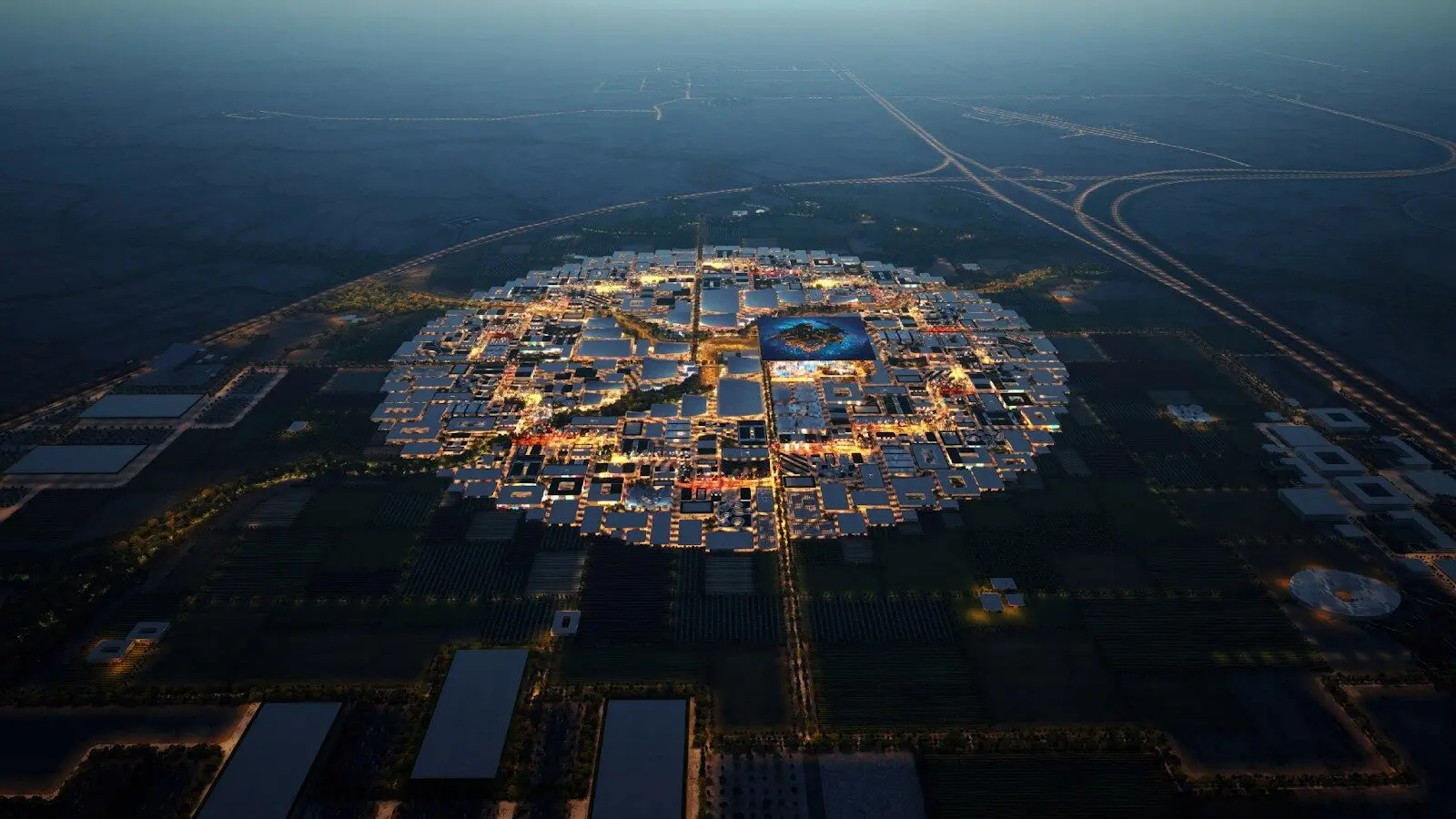
Following Osaka, the global spotlight will move to the Middle East once again as Riyadh, Saudi Arabia, prepares to host Expo 2030.
Scheduled to take place from October 1, 2030, to March 31, 2031.
Riyadh’s bid, themed “The Era of Change: Together for a Foresighted Tomorrow,” aligns closely with Saudi Vision 2030.
The country’s ambitious national plan is to diversify its economy and embrace innovation, sustainability, and tourism.
Expo 2030 will be held on a purpose-built site north of Riyadh, designed with sustainability and accessibility in mind.
This event is expected to attract tens of millions of visitors, featuring futuristic pavilions, renewable energy solutions, and immersive cultural showcases.
For Saudi Arabia, hosting the Expo is more than a global event; it’s a statement of transformation.
Symbolising the nation’s desire to connect with the world in new and forward-looking ways.
As anticipation builds, Riyadh’s Expo promises to reflect a region redefining its global identity, one focused on collaboration, innovation, and shaping a shared vision for the decades to come.
Looking Toward 2035 And Beyond
Even before the next World Expo opens its doors, attention is already turning to Expo 2035, the next chance for countries to host this global celebration of innovation and culture.
While the official bidding process has yet to begin, several nations have expressed interest, including Busan, South Korea, which narrowly missed out on Expo 2030.
Each hopes to use the event as a platform to showcase their vision for a more sustainable and connected world.
As the 21st century unfolds, the World Expo continues to reinvent itself to match the pace of modern life.
Digital technology, virtual participation, and eco-friendly design are likely to define the expos of the future.
But at their core, these events remain about something timeless: human creativity and collaboration.
Whether it’s the Crystal Palace of 1851 or the smart cities of tomorrow, every Expo reflects how humanity imagines progress.
The journey from London to Riyadh and beyond tells one continuous story: the world coming together to celebrate ideas, culture, and the limitless possibilities of the future.
Related To Expos: