


A Chinese orchestra is often celebrated for its ability to evoke vivid imagery and deep emotions through music.
Yet, many listeners overlook the intricate roles played by strings, winds, and percussion in creating the unique soundscape that defines this ensemble.
These three families of instruments are the backbone of any Chinese orchestra, each contributing distinct textures, tones, and rhythms that blend harmoniously to produce an unforgettable auditory experience.
Understanding how these sections interact enhances appreciation for the art form and sheds light on the rich cultural heritage embedded within every performance.
Let’s explore how strings, winds, and percussion shape the sound of a Chinese orchestra.
Exploring The Role Of String Instruments In Creating Melodic Foundations
The strings section forms the foundation of a Chinese orchestra, much like its Western counterpart.
Each instrument brings something unique to the table, weaving together melodies that range from delicate and serene to bold and dramatic.
The Erhu: How This Two-Stringed Instrument Creates Hauntingly Beautiful Melodies
The erhu, often referred to as the “Chinese violin,” produces hauntingly beautiful melodies with its two-stringed design and bowing technique.
Its expressive tone makes it ideal for conveying emotion, whether it’s the melancholy of a love story or the tension of a battlefield.
Why The Guzheng Is Essential For Adding Depth And Texture In Chinese Orchestras
The guzheng, a plucked zither featuring between 18 and 23 strings stretched over movable bridges, creates shimmering, cascading notes that add depth and texture to compositions.
The Pipa’s Role In Injecting Energy And Intricate Ornamentation Into Performances
Meanwhile, the pipa, a pear-shaped lute with four strings, excels at delivering rapid-fire passages and intricate ornamentations, injecting a lively, dynamic element into the string section.
Together, these instruments work in harmony to carry the main melodies while providing harmonic support when needed.
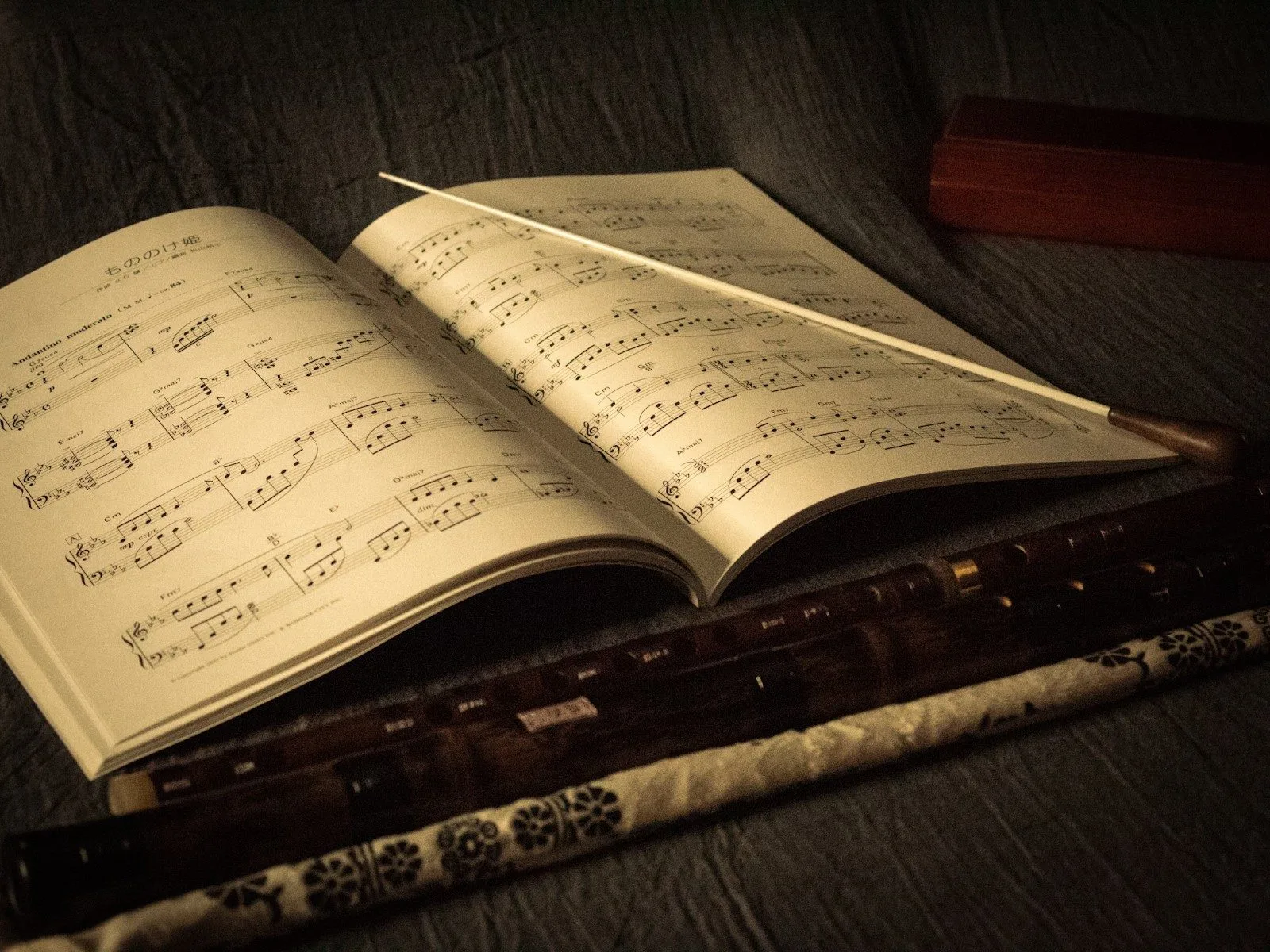
How Wind Instruments Add Depth And Colour To Chinese Orchestral Music
Source: Unsplash
If the strings represent the heartbeat of melody, then the wind section acts as the lungs, breathing life and colour into the orchestra.
Instruments like the dizi, sheng, and suona bring a variety of timbres and tonal qualities that enrich the sonic palette of the ensemble.
The Dizi Flute: Why Its Bright And Airy Sound Evokes Pastoral Imagery
Dizi, a bamboo flute known for its bright, airy sound, is perfect for evoking pastoral scenes or playful moods.
Its agility enables fast runs and trills, adding a sense of movement and fluidity to the music.
How The Sheng Bridges Melody And Harmony In Chinese Orchestral Music
The sheng, a free-reed mouth organ capable of producing both single notes and chords, serves as a bridge between melody and harmony.
The ethereal qualities of the sheng enrich the overall texture, creating a dreamlike atmosphere that captivates listeners.
The Suona’s Impact: Adding Energy And Celebratory Flair To Key Moments
Meanwhile, the suona, with its piercing, trumpet-like tone, commands attention.
Often used in celebratory or ceremonial contexts, it injects energy and excitement into performances, ensuring that key moments stand out.
The Impact Of Percussion Instruments On Rhythm And Dramatic Expression
Comprising instruments such as the paigu drums, bianzhong bells, and woodblocks, the group of percussion instruments provides rhythmic drive, dramatic accents, and ceremonial gravitas.
Paigu Drums: How These Tuned Drums Anchor Rhythms And Amplify Drama
Paigu drums, a set of tuned drums arranged in a row, deliver thunderous beats and precise pitches.
They anchor the rhythm while adding intensity during climactic moments, ensuring that the music maintains a strong pulse.
Why Bianzhong Bells Are Historically Significant In Chinese Orchestral Music
Bianzhong bells, ancient bronze bells suspended in frames, offer resonant, bell-like tones that lend a sense of grandeur and tradition to performances.
Historically significant, these bells remind listeners of the deep cultural roots embedded in Chinese orchestral music.
How Woodblocks Provide Clarity And Definition In Complex Compositions
Meanwhile, small yet impactful woodblocks punctuate phrases with sharp, staccato clicks. Their crisp sound cuts through the mix, providing clarity and definition to the overall composition.
Whether setting the pace for a serene meditation or amplifying the drama of a battle scene, these instruments are indispensable to the orchestra’s success.
Understanding The Synergy Between Strings, Winds, And Percussion In Chinese Orchestras
The true magic of a Chinese orchestra lies in the seamless interplay between strings, winds, and percussion.
How Strings, Winds, And Percussion Collaborate To Create Balanced Harmonies
Each section complements the others, creating a balanced and cohesive whole that captivates audiences.
For instance, strings might carry the main melody while winds embellish it with ornamental flourishes.
Percussion drives the rhythm, allowing the other sections to focus on melodic and harmonic development.
During crescendos or climaxes, all three sections unite to unleash a wall of sound that leaves listeners awestruck.
This synergy reflects the philosophy of yin and yang, where opposing forces come together to create harmony.
In a Chinese orchestra, contrasts between soft and loud, fast and slow, or high and low coexist beautifully, mirroring the diversity of human experience.
Enhancing Your Appreciation Of Chinese Orchestral Music Through Instrument Knowledge
For those new to Chinese orchestral music, recognising the contributions of strings, winds, and percussion can transform passive listening into active engagement.
Knowing which instruments are responsible for specific effects allows you to appreciate the craftsmanship behind each performance.
Why Cultural Significance Deepens Your Connection to Chinese Orchestral Music
Understanding the cultural significance of these instruments deepens your connection to the music.
Many of them have been passed down through generations, carrying stories and traditions that transcend time.
Listening becomes more than entertainment.
It becomes a journey through history and culture.
By paying close attention to how these sections collaborate, you’ll gain a richer, more nuanced appreciation for the artistry involved in crafting the enchanting sounds of a Chinese orchestra.
Experience The Magic Of Chinese Orchestras Through Online Performances
To truly grasp how strings, winds, and percussion shape the sound of a Chinese orchestra, there’s no substitute for experiencing it live or even virtually.
Platforms like YouTube host countless recordings of stunning performances by renowned ensembles such as the China National Traditional Orchestra and the Hong Kong Chinese Orchestra.
Watching these videos will give you a front-row seat to witness the interplay between the sections firsthand and deepen your understanding of this remarkable art form.
Related To Chinese Orchestra:
Falling Down the Musical Rabbit Hole: A How-to Guide to Discovering Tunes