


The second generation of K-pop, also known as the “Golden Age of K-pop”, has produced many now almost legendary artists such as SHINee, Girls’ Generation and IU.
Are you ready for the B.E.S.T (2NE1- I Am The Best) Era? 😀
Let’s take a closer look at this era together!
The Lasting Impact of Second Generation K-pop In The World Of Music!
Second-generation K-pop artists continue to inspire generations of K-pop artists, and their influence is still evident in today’s K-pop scene. Their contributions have paved the way for the global phenomenon that K-pop has become.
TVXQ – The Start of 2nd Generation K-Pop
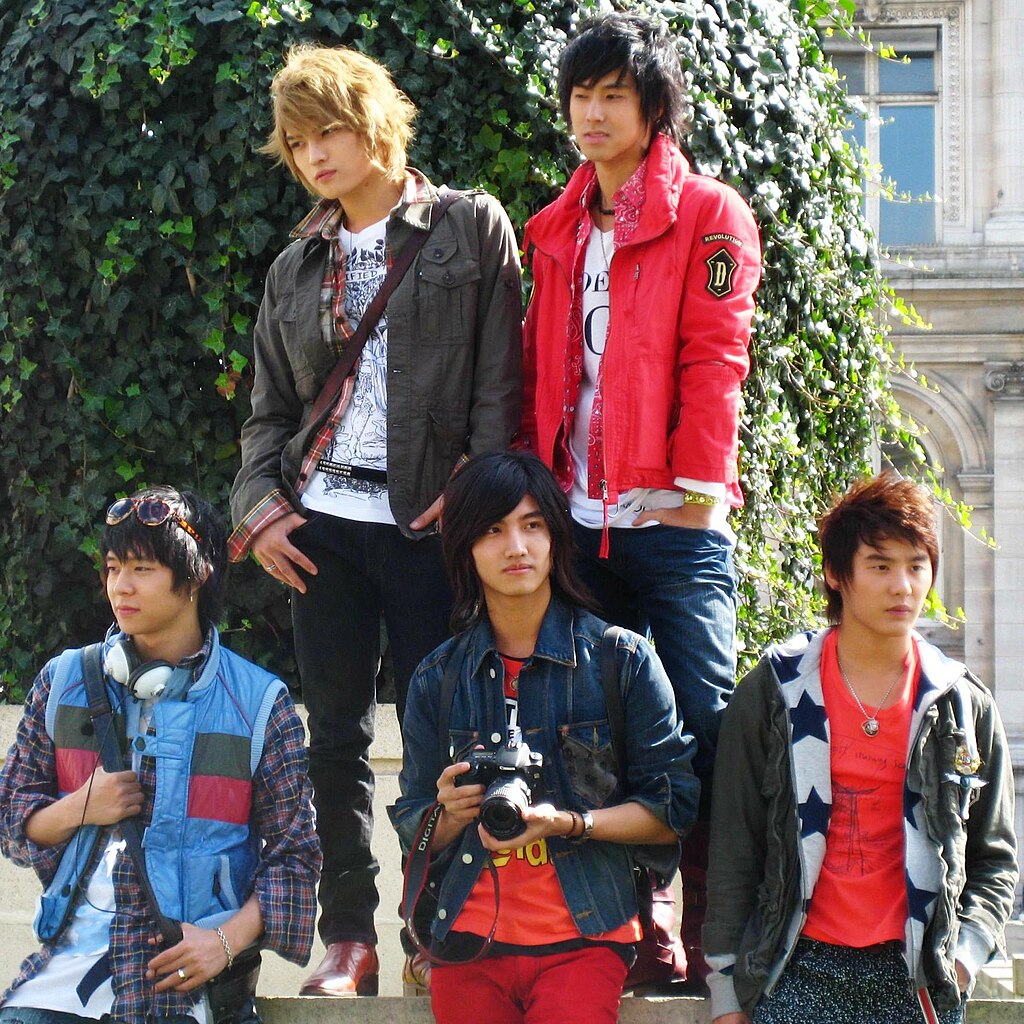
Source: By Ninjacatherine at English Wikipedia
It is widely believed that the 2nd Generation began in 2003 with the debut of the five-member boy group TVXQ from SM Entertainment.
Although some consider 2004/2005 as the starting point, there is general agreement that TVXQ belongs to the 2nd generation. So, since the boy group debuted in December 2003, we can be pretty specific.
Opinions are also not too far apart when it comes to the end of the generation. The majority agrees that the boy group EXO, which also belongs to SM Entertainment, was one of the first groups of the 3rd generation.
2nd Generation: The Golden Age Of K-Pop
During the second generation, artists helped K-pop blossom: They started experimenting more with their music, style, and concept, spreading the genre throughout Asia and beyond.
Many fondly remember this era of K-Pop to be the “Golden Age of K-Pop” as it laid the groundwork for future generations and significantly impacted the Korean Music Industry
Heard Of K-pop groups Like TVXQ, 2NE1, Big Bang, Girls Generation, and SHINee?
Sorry, sorry, sorry, sorry (ShiNee – Sorry) if you haven’t heard of them, you’re missing out. 🫣
These are a few of the most famous representatives: TVXQ, Super Junior, Girls’ Generation, SHINee, BigBang, 2NE1, 4Minute, Wonder Girls, 2 PM, Kara, T-ara, Sistar, and A-pink.
Like the first generation, the second generation of K-pop groups is still very much dominated by the Big 3 – SM Entertainment, JYP Entertainment & YG Entertainment.
Experiments with music, style, and concepts
After the 1st generation developed the basics of K-pop – choreographed & synchronised dances, coordinated outfits, catchy music, and a focus on good looks, second-generation artists increasingly experimented with the music and its concepts.
For example, groups like f(x) and SHINee incorporated elements of electro-pop and synth-pop into their songs.
Each comeback was also accompanied by new iconic fashion styles. SHINee started the so-called SHINee trend: suddenly everyone was wearing colourful skinny jeans and high tops!
Breaking Records and Spreading K-Pop Throughout Asia and beyond!
Shortly before the start of the second generation, K-pop celebrated its first major successes outside South Korea.
Among other things, singer BoA was the first Korean artist ever to top the Japanese Oricon charts with her Japanese debut album “Listen to My Heart”.
TVXQ has not only celebrated success in Asia but also set two world records in 2008 and 2009! In 2008, it was recorded in the Guinness Book of Records that TVXQ had the largest official (paid) fan club in the entire world.
Collecting Of Photo Cards And Lightsticks Became A Thing
Photo cards are probably the most popular K-Pop fan item, with which fans can fill entire binders with their favourite biases!
Opening a new album is especially exciting because we don’t know what photo card awaits us inside. Some fans even pick up the same album multiple times to get as many different photo cards as possible to complete their collection!
It’s like opening gacha/mystery packs! It gives you the thrill. 👾
The trend only started in 2007, when boy group TVXQ released their Japanese album “Summer Dream,” which included photo cards for the first time!
The popular Lightsticks, which are part of every K-Pop concert now, used to create the lightstick ocean- Yep, they were also created in the second generation!
G-Dragon from the boy group Big Bang (YG Entertainment) designed the very first lightstick in 2006 because he wanted to have something that Big Bang fans, called “V.I.P”, could identify with.
Quite Insane, don’t you think?
The 2nd Generation K-pop Paved The Way For The Genre’s Global Expansion
Groups like Big Bang, Girls Generation (SNSD), Shinee, 2NE1, Wonder Girls, and Super Junior introduced audiences worldwide to K-pop’s infectious melodies and dynamic performances.
This generation saw a shift in K-pop’s sound, with more hip-hop and R&B influences.
The choreography of each generation has become more intricate over time, with the second generation setting the stage for the complex routines seen today.
Some argue that BTS and PSY’s “Gangnam Style” were instrumental in introducing K-pop to the Western music market.
The second generation of K-pop has produced many legendary artists and has laid the groundwork for future generations.
So, do you know any of these bands from the second generation? Which was your favourite group?
Related Articles to Music:
111 English Songs We All Love To Listen To (Karaoke/KTV List)
21 Most Underrated English Songs You Should Add to Your Playlist Now!