

If you’re new to Teamfight Tactics (TFT), Riot Games’ auto-battler, the game can feel overwhelming at first.
With so many champions, traits, items, and strategies to learn, it’s easy to get lost in the chaos of the battlefield.
But don’t worry, once you understand the core mechanics, TFT becomes a rewarding mix of strategy, adaptability, and creativity.
This beginner’s guide will break down the essentials, from managing your gold to building synergies and positioning your champions.
So you can step into your first matches with confidence and start climbing the ranks.
What Is Teamfight Tactics And How Does It Work?
Teamfight Tactics (TFT) is an auto-battler strategy game developed by Riot Games, set in the League of Legends universe.
Unlike traditional games where you directly control characters, TFT focuses on strategic decision-making.
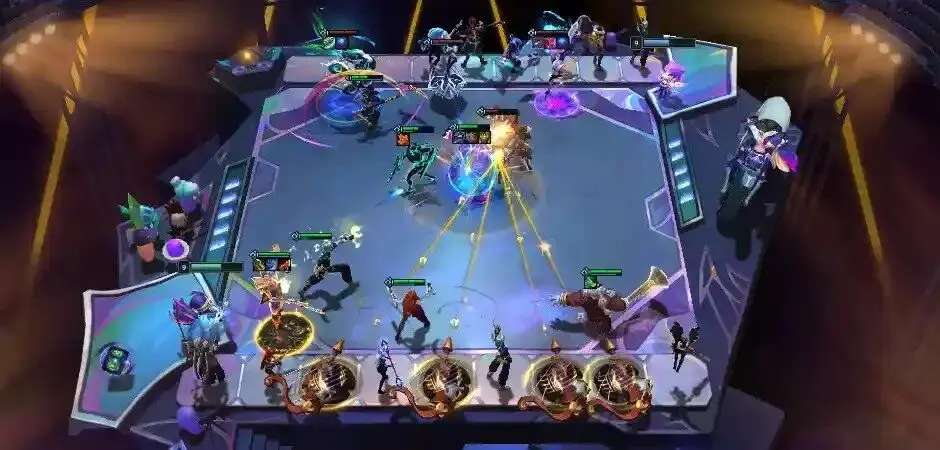
Your role is to recruit champions, place them on a grid-style board, and then watch as they automatically battle opponents’ teams.
Each match is a series of rounds where you compete against other players, and your goal is to build the strongest possible team composition to outlast the battle.
The core of TFT lies in adapting to what the game gives you: champion shop options, random item drops, and the overall meta.
Winning isn’t just about having strong units; it’s about understanding synergies, positioning, and economy management.
Every decision, from rerolling the shop to upgrading champions, impacts your chances of success. Think of it as a chess game with ever-changing pieces.
Understanding The Basics: Gold, Health, And Experience
Source: GGBoost
Before diving into advanced strategies, every TFT beginner needs to grasp the three fundamental resources: gold, health, and experience (XP).
Gold is the currency you’ll use to buy champions, reroll the shop, and level up.
Managing it wisely is crucial; some players save for interest bonuses, while others spend aggressively to power up their team (tip: save 50 gold and above for the best interest).
Health represents your standing in the match.
Each time you lose a round, you take damage based on the enemy’s surviving units and their star level.
Protecting your health is important, but sometimes taking early losses to build a stronger late-game board is a valid strategy.
Experience, on the other hand, determines your player level, which controls both your board size and the quality of champions in the shop.
Deciding when to level up versus when to save gold is a constant balancing act, and mastering it can be the difference between top-four and elimination.
Units, Traits, And Building Strong Synergies
At the heart of Teamfight Tactics are units (champions) and the traits they carry.
Each champion belongs to specific origins and classes, and when combined with others of the same type, they activate synergies that provide powerful bonuses.
For example, stacking Mage units increases spell casts, while Defender units boost armour for your frontline.
Learning which traits work well together is essential for building a team that can handle different opponents.
Synergies aren’t just about stacking as many as possible—you also need to balance roles.
A strong team usually has a solid frontline to absorb damage, reliable damage dealers in the backline, and utility champions that provide crowd control or healing.
Since shops are randomised, you won’t always get the exact champions you want.
The key is to adapt to what the game offers while keeping synergy in mind. Flexibility often separates beginners from skilled players.
Itemisation 101: Equipping Your Champions For Success
Items in TFT can make or break your team.
They’re obtained from minion rounds, carousels, or through loot drops, and each basic component can be combined into a stronger completed item.
For example, combining a B.F. Sword and a Recurve Bow create Giant Slayer, a powerful item that helps shred tanky enemies.
Learning the different item combinations is a huge step toward improving your gameplay.
Equipping the right items on the right champions is just as important as building synergies.
Carry units, those who deal most of your damage, should receive offensive items like Infinity Edge or Rabadon’s Deathcap.
While tanks benefit from defensive items such as Warmog’s Armour or Bramble Vest.
Placement matters too; if a champion dies too quickly, their items are wasted.
Beginners often fall into the trap of making items without considering who benefits most.
Always think about your team composition and late-game carry before finalising items.
Positioning And Strategy: Winning the Board
Even with strong champions and items, poor positioning can cost you the game.
In TFT, where you place units on the board directly impacts how battles play out.
Tanks and frontliners should usually be positioned at the front to absorb damage, while fragile damage dealers, like Mages or Marksmen, belong in the backline where they’re protected.
Support units with healing or crowd control often perform best in the middle rows, where their abilities can reach more allies.
Another layer of strategy involves scouting opponents.
By clicking on other players’ boards, you can see where their carries are positioned and adjust your own formation to counter them.
For example, if an enemy Assassin is targeting your backline, shifting your carry to a safer corner could save the round.
Mastering positioning isn’t just about your own board; it’s about predicting what your opponents will do and staying one step ahead.
Beginner Tips And Common Mistakes To Avoid

Source: esports.gg
First, don’t tunnel on one strategy or trait from the start.
Because champion shops are randomised, flexibility is key—forcing a single composition often leads to weak boards if the right units never appear.
Instead, learn to pivot into synergies that the game naturally offers you.
Second, be mindful of your economy.
Many beginners spend gold recklessly, rerolling too often or levelling without a plan.
Maintaining a strong economy through interest and win/loss streaks is just as important as having a good board.
Finally, remember that adaptability beats memorisation.
Knowing the meta is helpful, but reacting to each unique match makes you a better player long-term.
Treat every loss as a learning opportunity, and over time, you’ll climb the ranks with confidence.
Related To Teamfight Tactics: