


Ready to dive into the exciting world of online retail?
Learning how to start an eCommerce store in 2025 is a journey, but with the right plan, it’s a rewarding one.
This comprehensive guide breaks down everything you need to know to launch and grow a successful online business.
The eCommerce landscape is constantly evolving, so staying adaptable and informed is key.
What Is An Example Of An E-Commerce Store?
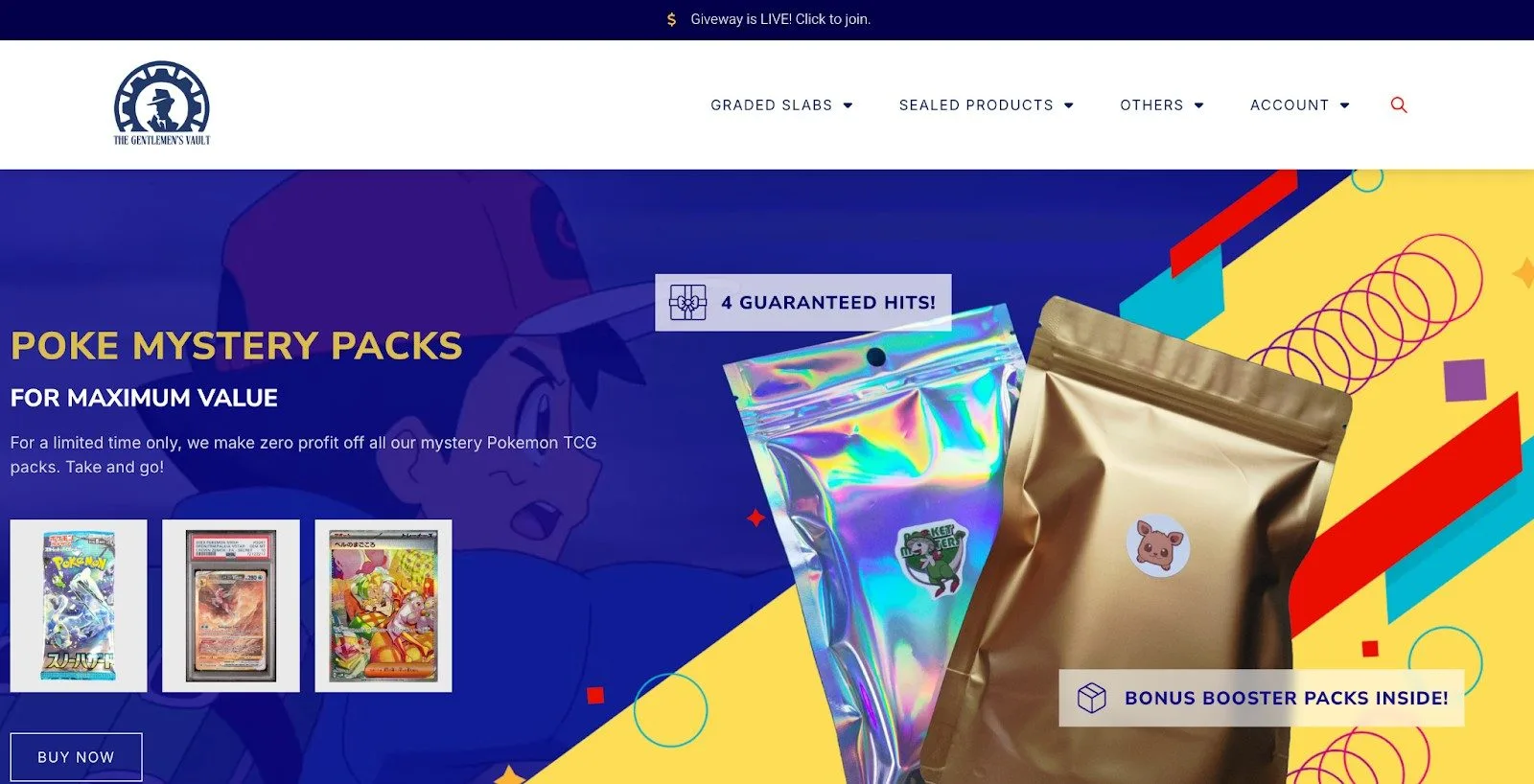
Source: The Gentlemen’s Vault
A standout example of a thriving eCommerce business is The Gentlemen’s Vault, a go-to destination for Pokémon card collectors and trading card game (TCG) enthusiasts.
Showcasing a wide selection of rare Pokémon cards, booster packs, graded cards, and collector’s editions, both casual fans and serious investors will be attracted to this eCommerce store.
With a sleek, easy-to-navigate website, high-quality product images, and detailed card descriptions, the online shopping experience on The Gentlemen’s Vault is smooth and fuss-free.
The brand effectively utilises SEO-driven content, social media marketing, and email campaigns to attract buyers searching for Pokémon card deals.
By implementing a competitive pricing strategy, secure payment options, and reliable shipping, the store sets a strong example for eCommerce entrepreneurs looking to enter the collectible market in 2025.
Want to have a store like them?
Contact Guidesify today to take your eCommerce business to the next level!
Guidesify is an IMDA pre-approved vendor for eCommerce and Digital Marketing solutions and supports numerous businesses with their digitalisation plans.
Guidesify offers well-designed and optimized e-commerce website solutions that can handle significant traffic with its lean tech stack, making it an excellent tool for businesses aiming to start or expand their eCommerce business.
Factors That You Should Consider When Choosing Your E-Commerce Business Model

Source: Pexels
Before you build your store, you need a business model. Consider these options:
Dropshipping: Low-Cost Startup, But With Challenges
Dropshipping is a business model where the business owner does not need to hold any inventory.
Your supplier handles storage and fulfilment, making it a low-cost and beginner-friendly entry point into eCommerce.
A drawback of dropshipping is that profit margins are often lower due to supplier fees, shipping times can be unpredictable, and you have less control over product quality and stock availability.
Print-On-Demand (POD): Custom Products With Low Risk, But Lower Margins
POD allows you to create and sell custom-designed products like t-shirts, mugs, and phone cases, which are only produced when an order is placed.
This eliminates the need for inventory storage and upfront costs, making it a low-risk business model.
One downside of POD is that similar to dropshipping, profit margins are typically lower due to higher production costs per item, fulfilment times can be longer, and you have limited control over product quality and shipping.
Wholesale And Retail: Higher Profit Margins But Requires Upfront Investment
Wholesale and retail involve buying products in bulk at lower wholesale prices and reselling them at higher retail prices for a profit.
This business model offers better control over product quality, branding, and pricing, leading to higher profit margins.
Possible challenges include higher upfront capital needed to invest in inventory, storage space to keep products, and efficient logistics to manage orders.
There is also a risk of unsold stock, which can lead to potential losses if demand fluctuates.
Subscription-Based Model: Recurring Revenue With Customer Retention Challenges
A subscription-based business model allows you to offer recurring deliveries of products or access to services for a regular fee.
This creates a steady stream of predictable revenue and fosters long-term customer relationships.
Do note that it may be difficult to retain customers for a long period of time if your product or service does not provide enough ongoing value.
Customers may cancel their subscriptions, leading to high churn rates.
To succeed, businesses must continuously enhance their offerings and keep customers engaged.
Digital Products: High-Profit Margins But Trust Can Be Hard To Earn
Selling digital products like ebooks, online courses, software, or music is a highly scalable business model with low overhead costs, no inventory, and no shipping fees.
This makes it an attractive option for entrepreneurs looking for passive income opportunities.
The main issue lies in building credibility.
Many customers associate digital products with internet gurus and low-value content, making it harder to gain trust and justify premium pricing.
To succeed, your business must focus on delivering genuine value, building authority, and maintaining a strong brand reputation.
Tried-And-Tested Methods You Can Use To Find Profitable Products To Sell Online

Source: Pexels
Product selection is critical to your eCommerce success. Here’s how to find winning products:
Identify Trends With Free Tools Like Google Trends And Amazon Best Seller Lists
Use tools like Google Trends, explore Amazon Best Seller lists, and monitor social media platforms like TikTok and Instagram for emerging trends.
Address The Problems That Your Customer Faces
Look for unmet needs or pain points in the market.
What problems can your products solve for customers?
Validate Demand Using Keyword Research Tools
Use keyword research tools to see how many people are searching for your potential products.
High search volume often indicates strong demand.
Deciding On Which Platform To Source Your Products
Decide how you’ll acquire your products.
Options include sourcing from local suppliers, printing-on-demand services, or dropshipping from platforms like AliExpress.
The Product Selection Triangle: Balancing Saturation, Market Size And Entry Barriers For Maximum Profitability
When evaluating potential products, think of saturation, barrier to entry, and size of market as three points of a triangle.
Ideally, you’d want low saturation (less competition), a high barrier to entry (protecting you from future competitors), and a large market size (plenty of potential customers).
In reality, you usually have to compromise and choose only two out of these three desirable characteristics.
For example, a large market with a low barrier to entry will likely become highly saturated quickly.
Niche markets with a high barrier to entry might offer less competition, but the overall market size (and therefore, potential revenue) could be limited.
Large, unsaturated markets likely have a very high barrier to entry, making it difficult for a new business to even get started.
Understanding this triangle and the inherent trade-offs helps you make strategic decisions about which niche to pursue and which product characteristics to prioritize.
Your goal is to find the optimal balance that aligns with your resources, risk tolerance, and long-term business goals.
It’s rare to find the “perfect” product that has all three traits.
Instead, focus on finding a viable combination that gives you the best chance of sustainable success.
Popular Tools (Semrush, Ahrefs, SpyFu) You Can Use To Research Your Competition

Source: Pexels
Understanding your competition is essential.
Analyze your competitors to identify opportunities and differentiate your brand.
Use tools like Semrush, Ahrefs and SpyFu to analyze competitor keywords, backlinks, and advertising strategies.
To perform effective qualitative research on your competitors, you should examine their top selling products, pricing, marketing strategies (SEO, social media, paid advertisements) and customer reviews.
You should also study both the positive and negative customer feedback to your competitors’ stores.
After analysing your market and competition, define your unique selling proposition (USP).
What makes your store different and better than the competition?
This could be unique products, superior customer service, a strong brand story, or a focus on a specific niche.
Shopify Vs WooCommerce Vs BigCommerce Vs Wix eCommerce Vs Magento (Adobe Commerce): Which E-Commerce Platform Is The Best For Your Business?

Source: Pexels
Your eCommerce platform is the foundation of your online store.
Choosing the right eCommerce platform that is tailored to your business needs is important for the success of your business.
Popular options include:
Shopify: A popular, user-friendly, all-in-one platform with a wide range of apps and integrations. Ideal for beginners and growing businesses.
WooCommerce: A free, open-source plugin for WordPress. Highly customizable but requires more technical knowledge.
BigCommerce: A robust platform designed for scalability, suitable for larger businesses with complex needs.
Wix eCommerce: A beginner-friendly, drag-and-drop website builder with eCommerce features.
Magento (Adobe Commerce): An enterprise-level platform for large businesses with advanced customization requirements.
Consider factors like pricing, ease of use, available features, payment gateway integrations, and scalability when making your choice.
Tips And Tricks To Build And Design Your E-Commerce Website
Source: Pexels
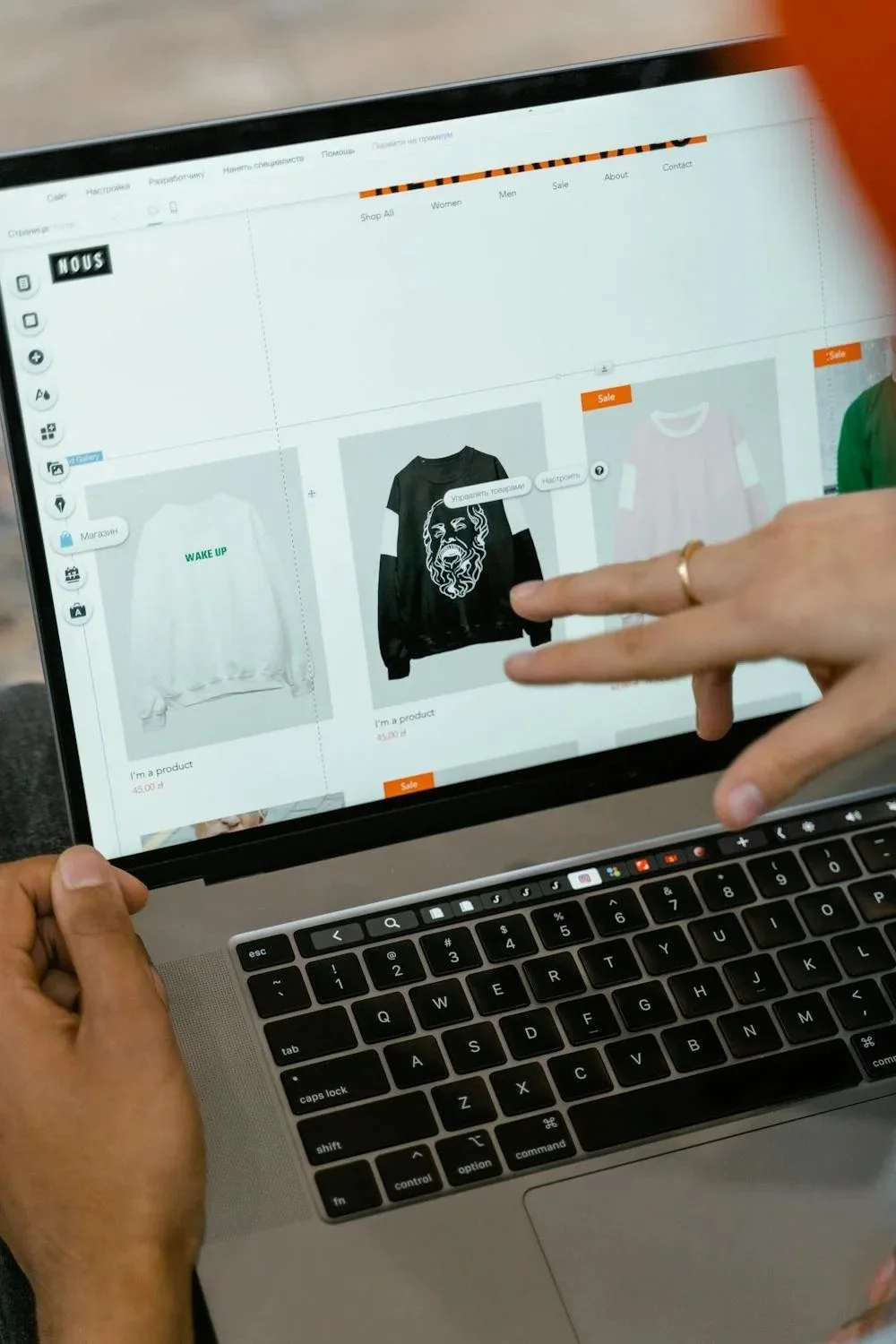
Your website serves as your digital storefront, the primary point of interaction between your business and your customers.
Therefore, it’s essential that your website is visually appealing, easy to navigate, and optimized for conversions, encouraging visitors to become paying customers.
Several key considerations contribute to an effective eCommerce website.
First, your domain name should be carefully chosen; it should be memorable, brand-relevant, and easy to spell and pronounce.
The website theme you select plays a crucial role in the overall look and feel of your store.
Choose a professional-looking, modern theme that is mobile-responsive, ensuring it displays correctly and functions seamlessly on all devices (desktops, tablets, and smartphones).
Your product pages are critical for driving sales; write compelling and persuasive product descriptions that highlight the benefits and features of each item, using high-quality product images and videos to showcase your products effectively.
Above all, prioritize User Experience (UX); ensure your website is fast-loading, easy to navigate, with a clear and intuitive structure, and a streamlined checkout process.
Minimize the number of steps required to complete a purchase to reduce cart abandonment and maximize conversions.
A well-designed and user-friendly website is fundamental to a successful ecommerce business.
Developing A Powerful E-Commerce Marketing Strategy

Source: Pexels
Driving traffic to your store is crucial, and a comprehensive marketing strategy is key to achieving this.
Firstly, prioritize Search Engine Optimization (SEO) by optimizing your product pages and overall website content with relevant keywords.
SEO techniques will help your store rank higher in search engine results, like Google, for relevant searches, driving organic traffic.
Another important marketing strategy is content marketing.
You need to create valuable and engaging content, such as blog posts, articles, and videos, that are related to your niche and target audience.
This attracts potential customers, builds brand authority, and provides valuable information.
Don’t neglect Social Media Marketing.
Build a strong presence on platforms like Instagram, TikTok, Facebook, and Pinterest, where you can connect directly with your target audience, promote your products, and run targeted campaigns.
To accelerate growth, consider Paid Advertising (PPC) using platforms like Google Ads and Facebook Ads.
These marketing tactics are essential for attracting a consistent flow of visitors to your eCommerce store.
How Do You Set Up Shipping And Fulfilment For Your E-Commerce Store?
Source: Pexels
A smooth and efficient shipping process is vital for customer satisfaction and repeat business in your eCommerce store.
Several key considerations contribute to a positive shipping experience, including your fulfilment options.
You can choose between self-fulfilment, where you handle all aspects of shipping yourself, using a third-party logistics (3PL) provider, like Easyship.
Easyship aggregates various logistics providers and allows customers to dynamically calculate shipping costs, choose their preferred provider, and pay upfront.
Alternatively, local fulfilment or dropshipping, where your supplier ships directly to the customer, are also viable options.
Online Vs Local Fulfilment For Your eCommerce Store
When deciding between online or international fulfilment and local fulfilment, consider factors like delivery time, shipping costs, and customer experience.
Online fulfilment can offer more extensive reach, but shipping times can be longer and costs higher, whereas local fulfilment can offer faster delivery and lower shipping fees, though it may limit your reach.
Using aggregators like Easyship comes with its challenges.
While they provide convenience and flexibility, they may not be 100% accurate in calculating shipping costs, which could lead to undercharging or overcharging customers.
There might also be inflexibility in excluding unreliable logistics providers, which can negatively impact customer experience.
Your choice will ultimately depend on factors like order volume, product type, available resources, and the level of control you need over the fulfilment process.
Shipping Costs are another major factor.
Strive to offer competitive shipping rates that are attractive to customers.
One popular strategy is to offer free shipping for orders that exceed a certain purchase amount, incentivizing larger orders.
Transparency is crucial, so clearly communicate your Shipping Policies on your website.
This includes providing estimated delivery times, outlining your return and exchange procedures, and specifying any shipping restrictions.
Finally, customers should always be provided with order tracking information.
The order tracking information allows them to monitor the progress of their shipment, reducing anxiety and increasing their confidence in your service.
By carefully managing these aspects of shipping and fulfilment, you can build customer trust and encourage loyalty.
Tracking Key Metrics And Optimizing For Growth
Once your store is live, continuous monitoring and optimization are essential.
Track key metrics like:
- Conversion Rate: The percentage of website visitors who make a purchase.
- Customer Acquisition Cost (CAC): The cost of acquiring a new customer.
- Average Order Value (AOV): The average amount spent per order.
- Website Traffic Sources: Understand where your visitors are coming from (organic search, social media, paid ads, etc.).
- Cart Abandonment Rate: The percentage of shoppers who add items to their cart but don’t complete the purchase.
- Sales and Revenue Trends: track your progress.
- Use analytics tools like Google Analytics, Shopify’s built-in reports, and heatmap tools to gain insights and identify areas for improvement.
Common E-Commerce Mistakes to Avoid

Source: Pexels
Many new eCommerce businesses stumble due to avoidable mistakes, significantly impacting their chances of success.
To maximize your store’s potential, it’s crucial to proactively avoid these common pitfalls.
One of the most frequent errors is insufficient market research.
Always thoroughly research your chosen niche and validate the demand for your proposed products before investing significant resources.
Neglecting SEO is another critical mistake; SEO is essential for driving organic traffic to your store, so prioritize optimizing your website and content.
Poor website design and user experience can be detrimental, as a slow-loading, confusing, or visually unappealing website will deter potential customers and lead to high bounce rates.
Another common pitfall is underestimating costs.
Be sure to carefully and accurately estimate your startup and ongoing expenses, including marketing budgets, inventory costs, platform fees, and shipping expenses.
A lack of customer service can severely damage your reputation.
Providing prompt, helpful, and friendly customer service is essential for building trust, resolving issues, and fostering customer loyalty.
Finally, ignoring customer reviews and payment security creates an impression of untrustworthiness.
Do display customer testimonials prominently, use secure payment gateways, and feature trust badges to reassure customers about the safety and legitimacy of your store.
By being aware of and actively avoiding these common mistakes, you can significantly improve your eCommerce business’s long-term viability.
How Much Does It Cost To Start An E-Commerce Business?

Source: Pexels
Determining the cost of starting an eCommerce store can vary widely depending on your business model and choices.
For a basic setup, the costs can range from $100 to $300.
This includes the cost of purchasing a domain name, buying a basic website plan, and having a minimal marketing campaign.
Be careful of being fooled by most of the entry plans.
Most of the entry plans may not have the basic features or functionalities that you will need to operate your eCommerce store.
Even worse, some entry plans may come with hidden costs in the form of plugins for essential functionalities.
The basic setup is usually more applicable to Dropshipping or Print On Demand eCommerce businesses.
If you are aiming for a more advanced setup that uses an inventory-based store, the costs can range from 2,000 to upwards of 5,000.
You will need to factor in the costs of purchasing the inventory, building the eCommerce website, running a marketing campaign, storage and shipping options.
Benefits include but are not limited to having a website with significantly more advanced features and customisability, and a larger marketing budget.
Building your own successful eCommerce business is as exciting as it is challenging.
You’ll learn about choosing a product, evaluating its viability, figuring out how to get it produced, building an eCommerce website, and marketing and selling to new audiences.
At times, you may feel like you’re solving a head-scratcher of a puzzle, but it’s rewarding all the same.
Hopefully, this eCommerce business guide has provided you with a roadmap for your journey.
As always, the best advice anyone can give is to get started and enjoy yourself along the way.
Related To eCommerce: