


Chess is a game that has been around for many decades.♟️
The game is a 1 v 1 where the objective of the game is to checkmate the opponent.
To win, the player must outsmart, out manoeuvre, and out-strategise the person on the other side.
It is a brutal game where luck is not a factor.
Every move on the board and every little mistake may just cost you the game.
While some see it as just a fun game to pass the time, the game of chess truly teaches the principles of hard work, pattern recognition, and self-accountability.
Learn the principles of chess and you will find that it can help you in your own life outside of chess. 👍
Understanding the Chessboard

Source: Pexels
The chessboard is an 8×8 grid with alternating light and dark squares.
Each square has a coordinate, like “a1” or “h8,” which helps identify positions.
White’s pieces start on the bottom two rows, with pawns on the second rank and the main pieces on the first rank.
Always remember: the bottom right-hand square should be light-coloured. ◻️
Setting Up the Pieces
Source: Pexels
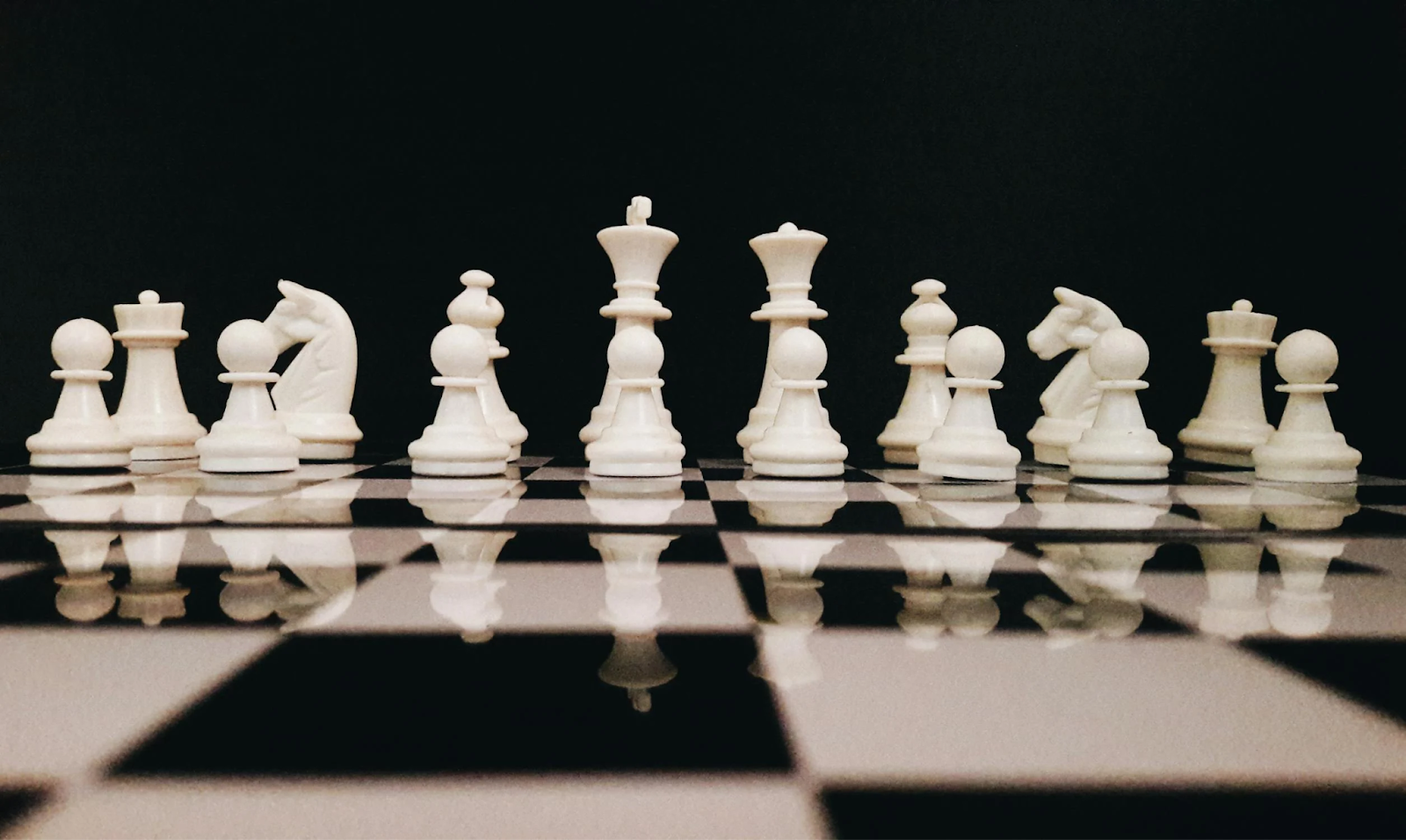
Each side has eight pawns, which go on the second and seventh ranks.
The back rank is for the main pieces.
Rooks (castle-like structures) go in the corners, followed by knights (horses), then bishops (pointed hats).
In the centre, the queen and king take their places.
Remember, the queen always starts with her matching colour: white queen on a light square, black queen on a dark square.
On the other hand, the king always starts with his opposite colour.
How the Pieces Move
Pawns
Pawns move forward one square at a time, but they capture diagonally.
On their first move, they can move forward two squares.
If a pawn reaches the other end of the board, it can be promoted to any piece except another king.
(There’s a special rule called “en passant,” where a pawn can move diagonally and capture an enemy pawn that moves two squares forward from its starting position)
Knights
Knights move in an L-shape: two squares in one direction and then one square perpendicular.
They’re the only pieces that can jump over others, which makes them quite unique.
Bishops
Bishops move diagonally and stay on their starting square colour.
They can cover long distances as long as the path is clear.
Rooks
Rooks move vertically or horizontally across any number of squares.
They’re great for controlling open lines on the board.
Queens
Queens are the most powerful piece.
They combine the movement of rooks and bishops, moving diagonally, vertically, or horizontally as far as possible.
However, they still cannot cover the squares a knight can.
Kings
Kings move one square in any direction.
They’re not very powerful, but keeping them safe is your top priority.
There’s also a move called “castling,” where the king moves two squares toward a rook, and the rook jumps over the king.
This move helps safeguard the king and connect the rooks.
The Goal Of Chess: Check and Checkmate
Source: Pexels
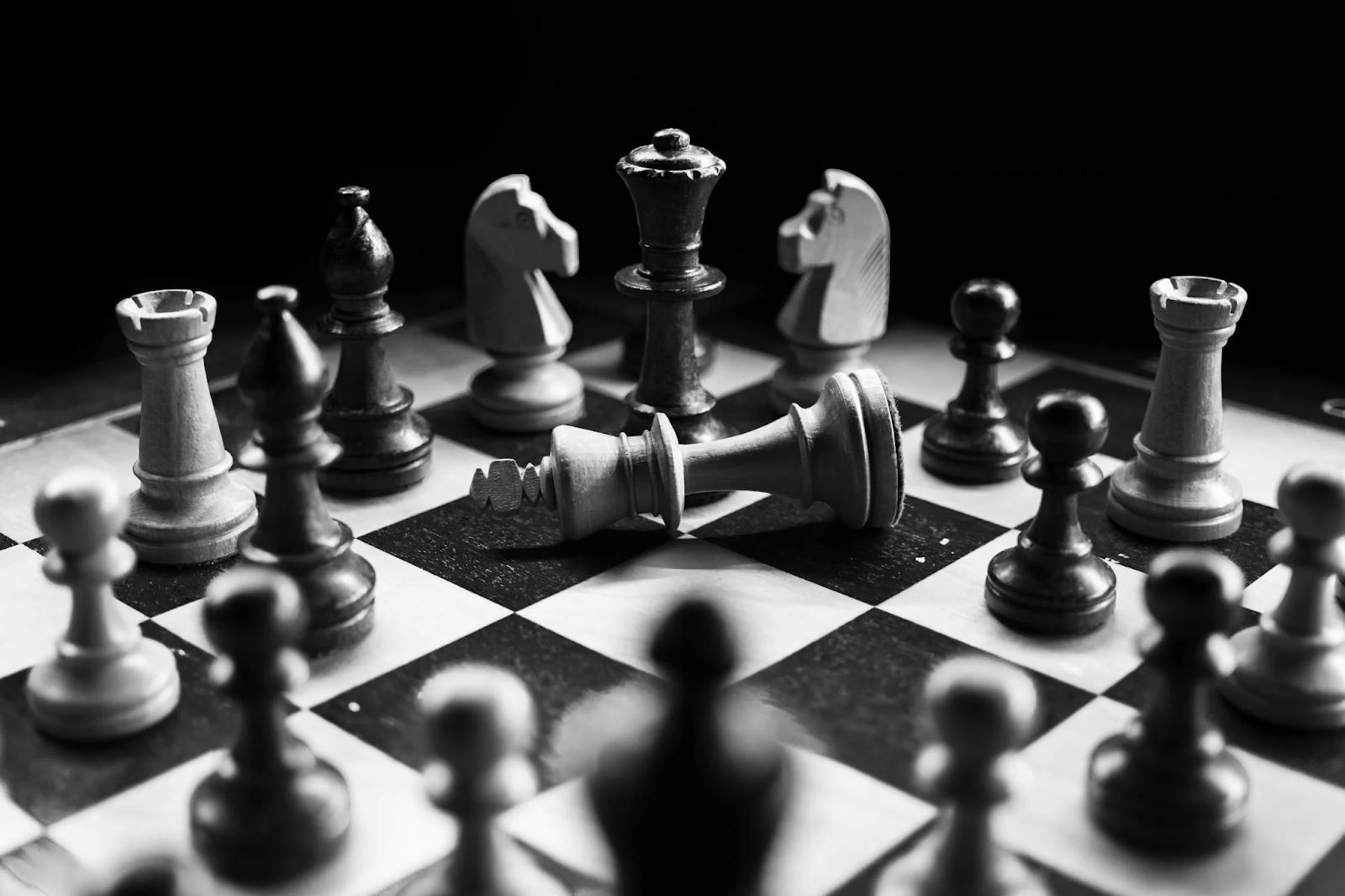
The goal of chess is to checkmate your opponent’s king.
A king is in check when he’s under threat of capture.
He should move the king out of danger, block the threat, or capture the attacking piece.
Checkmate occurs when the king is under attack and cannot escape. 👑
This automatically terminates the game.
Beware of the stalemate position, this is when a player has no legal moves but is not in check, and the game is drawn.
Basic Opening Principles Of Chess
The opening is all about setting up your pieces and controlling the board.
Start by placing pawns in the centre, like e4 or d4.
This gives your pieces more room to move.
Bring out your knights and bishops early, aiming them toward the centre of the board.
Avoid moving the same piece repeatedly in the opening.
Instead, focus on developing all your pieces.
Castling early is a good idea to protect your king and connect your rooks. 👍
How Chess Pieces Interact
Source: Pexels
Understanding how pieces attack and defend each other is key to improving.
For example, rooks and queens have a long-range vision, while knights are better at close-range tactics.
Always think about the “value” of a trade.
A queen is worth nine points, a rook five, bishops and knights three, and pawns one.
Although a knight is worth the same points as a bishop, it is important to know that your position can put more value on either one.
Try to make trades that give you a good deal—don’t lose your queen for a pawn!
Different Chess Tactics And Strategies
Tactics are short-term moves that force your opponent to respond.
Some common tactics include:
- Forks: One piece attacks two or more enemy pieces at the same time.
- Pins: A piece is stuck because moving it would expose a more valuable piece behind it.
- Skewers: Similar to a pin but targets the more valuable piece first, forcing it to move and exposing a weaker piece.
Strategy, on the other hand, is about planning long-term.
Control important squares, improve the position of your pieces, and think ahead.
Endgame Essentials

Source: Pexels
In the endgame, fewer pieces remain, and the focus shifts to promoting pawns and checkmating the king.
Learn basic checkmates, like how to win with a queen and king versus a lone king.
Practice ladder checkmates, where two rooks or a rook and a queen work together to push the opponent’s king to the edge of the board. 🪜
Understanding pawn promotion and king activity is also crucial in the endgame.
Create A Study Plan To Improve Your Chess
To improve, start by playing longer games (10-15 minutes) and focus on learning from your mistakes.
Solve chess puzzles daily to build your tactical skills.
Aim for quality over quantity; get every puzzle right by taking your time.
Learn a few solid openings for both white and black.
Stick to the basics and avoid overly complicated strategies at first.
Finally, practice endgame techniques so you can confidently finish a game when you’re ahead.
Chess is a game of infinite possibilities, and every player’s journey is unique.
With practice and patience, you’ll start to see improvement and enjoy the game even more.
So grab a board, challenge a friend, and start your chess adventure today! ✨
Related to Chess:
4 Popular Trading Card Games to Try
From Sci-Fi To Reality: The Rise Of Laser Tag And What You Need To Know