


The allure of Japan, a country steeped in tradition and modernity, has captivated the hearts of people from around the world.
In recent years, however, the influx of tourists has put a strain on its infrastructure, leading to the phenomenon of overtourism.
Recent measures aimed at curbing this issue are the implementation of a tourist tax, specifically in Kyoto, a city renowned for its stunning temples and geisha culture.
But will this solution address the root cause of the problem, or is it just a Band-Aid on a deeper issue yet to be resolved?
Japan’s Entertainment Industry Draws In Waves Of Eager Fans Every Year
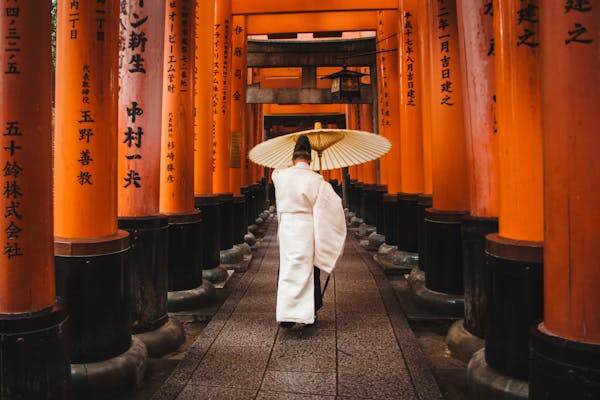
Source: Pexels
One major contributing factor in boosting Japan’s tourism levels is the global impact of its entertainment industry.
The popularity of Japanese TV shows has expanded abroad, with anime becoming a darling to many fans overseas.
Anime Acts As A Major Driving Force Of Attraction For Japan
Anime, as a market segment, is capable of transcending the language barrier that hinders overseas viewers from watching live-action dramas.
A report also shows that primary overseas markets for Japanese broadcast content are in Asia and North America, with Asia leading by 64.2% and North America by 24.4%.
The potential of anime has proven yet again: a driving force behind Japanese pop culture events across the continent, with events like the Japan Expo in Paris and the breakthrough of the ‘Demon Slayer’ movie being prime examples.
Based on the original manga, the global box-office hit grossed well over 500 million USD in December 2022, attracting both existing and new fans alike.
One advantage anime has as an industry is an established scheme for dividing labour between publishers who work on formatting and development based on manga or prose novels and television stations and movie studios that produce the animated version of works.
The Growing Popularity of Japanese TV Abroad
Revenues from overseas sales of Japanese broadcast content totalled ¥6.6 billion in 2010, a figure that grew to ¥39.4 billion by 2016.
It’s not difficult to imagine that overseas audiences have become interested in Japan as a result of watching programs that showcase Japanese culture and lifestyles and thus have been visiting Japan in ever greater numbers.
According to a Ministry of Internal Affairs and Communications report analyzing overseas sales of Japanese broadcast content in 2016, anime accounted for 80% of sales of marketing rights, which covers over-the-air broadcasts, online distribution, and videocassettes and DVDs.
The Weakening Of Japanese Yen Encourages International Tourism
The weak yen has had a significant impact on tourism in Japan. With the exchange rate in their favour, tourists are flocking to the country, eager to take advantage of the affordable prices.
Many locals, however, are not fazed by the influx of tourists and their spending habits. Some even encourage them to enjoy Japan and spend as much as they like.
As the yen continues to weaken, tourism in Japan will likely continue to grow.
With the country being an already popular destination, the favourable exchange rate is making it even more attractive to visitors.
However, it’s essential for the government and local authorities to ensure that tourism is sustainable and doesn’t harm the environment or local communities.
Overtourism Is A Raising Cause Of Concern In Japan
The past decade has seen a significant surge in tourism in Japan, with the number of foreign visitors increasing from 6.2 million in 2011 to over 30 million in 2019.
While this influx of tourists has brought in much-needed revenue, it has also put a strain on the country’s infrastructure, particularly in popular destinations like Kyoto.
Japan’s narrow streets and centuries-old temples are struggling to cope with the sheer number of visitors, leading to concerns about overcrowding, noise pollution, and the degradation of the city’s cultural heritage.
Recent implementation of a tourist tax is seen as a way to mitigate the effects of overtourism by encouraging visitors to be more mindful of their impact on the local environment and culture.
To scrutinise, the tax, which is set to increase from¥500 to¥1,000 per person per night, will be used to fund initiatives aimed at preserving the city’s cultural heritage and improving its infrastructure.
However, not everyone is convinced that this solution will be effective.
Tourism Might Be A Double-Edged Sword For Japan, Especially Over-Tourism

Source: Pexels
On the one hand, tourism has brought in much-needed revenue and created jobs for locals. On the other hand, it has also led to the gentrification of traditional neighbourhoods and the erosion of local culture.
The tourist tax is seen as a way to strike a balance between the economic benefits of tourism and the need to preserve the city’s cultural heritage.
However, some analysts argue that the tax may have unintended consequences, such as driving tourists to nearby cities like Osaka, where accommodation is cheaper.
This could lead to a loss of revenue for Kyoto’s hotel operators and a decrease in the effectiveness of the tax in reducing the number of tourists.
“Foreign tourists will quickly realize they can stay in a neighbouring city or town and just visit Kyoto for the day,” said Masaru Takayama, president of Kyoto-based Spirit of Japan Travel.
Over-Tourism Is Not Helping Prices For Japanese Locals
Another potential drawback of the tourist tax is its impact on domestic tourism.
While the tax may not be a significant burden for foreign tourists, who can take advantage of the weak yen to get more value for their money, it may be a different story for Japanese tourists.
“The plan is inevitably going to affect domestic tourists as well,” said Takayama. “Prices for Japanese people would still be relatively higher.”
This could lead to a decrease in domestic tourism, which could hurt the local economy.
Increasing Tourist Taxes: A Good Initial Approach, But Is It Sufficient For Japan?

Source: Pexels
Overtourism is a complex issue that requires a nuanced approach. While the tourist tax may be a step in the right direction, it is only one part of a larger solution.
To effectively address the problem of over-tourism, Kyoto needs to adopt a multifaceted approach that takes into account the needs of both tourists and locals.
This could include initiatives aimed at promoting sustainable tourism practices, such as eco-friendly accommodations and responsible travel behaviours.
The implementation of sustainable tourism practices may have short-term costs, but taxes need to be effective.
By promoting sustainable tourism, Kyoto can create a more resilient tourism industry that is better equipped to withstand the challenges of overtourism.
Overall, the presence of sustainable tourism efforts needs to be coupled with tourism taxes for the latter to be effective in the long run.
Related To Japan:
Japan 10 Days Travel Blog (Warning: Get Your Calendars Ready to Plan a Trip there!) – Guidesify